All-wheel drive vs. front-wheel drive: Who wins when driving in winter weather?
As harsh winter weather sets in, drivers in snow- and ice-prone areas of the country find themselves asking the same question: What matters more for winter performance, drivetrain or tires? For those in the market for a new winter commuter, the debate typically boils down to an all-wheel-drive (AWD) rig with all-season tires versus a front-wheel-drive (FWD) vehicle with winter tires.
In a perfect world, every winter driver would opt for all-wheel drive with winter tires. But with limited budgets and vehicle availability, most drivers opt for one or the other. Luckily, both setups work well in the winter—although they offer different benefits and downsides.
In this article, RealTruck.Com breaks down how drivetrains and tires affect winter driving and traction, compares each setup’s strengths and weaknesses, and determines which setup would work best for you.
How Drivetrain Affects Winter Capabilities
To kick things off, let’s discuss how the drivetrain impacts a vehicle’s capabilities in the winter. Your vehicle’s drivetrain determines which wheels receive power from the powertrain. On slick, snowy, and icy roads, this factor primarily affects how well a vehicle accelerates from a stop, maintains momentum, and climbs grades.
Regarding the two drivetrain configurations in question in this article—AWD and FWD—an all-wheel-drive vehicle receives power through all four wheels, while a front-wheel-drive system sends power only to the front wheels. In general, AWD vehicles demonstrate better traction than FWD vehicles, as FWD applications rely heavily on weight distribution and tire grip.
AWD Strengths and Limitations
All-wheel drive is often viewed as the ultimate winter solution—and for good reason. There’s a reason that you’ll usually see AWD Subarus dominating winter roads. However, this drive configuration doesn’t come without drawbacks.

In short, AWD helps your vehicle go, but it doesn’t necessarily help you to turn or stop, especially if tire grip is limited.
FWD Strengths and Limitations
Alternatively, FWD is the most common drivetrain on sedans, crossovers, and compact SUVs—and it performs surprisingly well in winter conditions with the right tires.
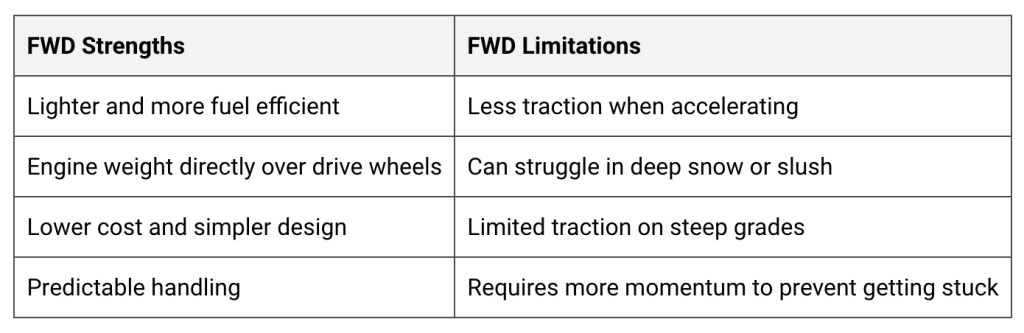
While FWD vehicles can be efficient and capable, they rely heavily on tire choice for traction.
How Tires Affect Winter Capabilities
The drivetrain is only half the traction problem. If drive configuration determines how well a vehicle moves forward in the snow, tires control the other main facets of traction, including stopping, cornering grip, and stability on icy and snowy roads. The two most common tires you’ll find on winter vehicles are all-season and winter tires.
All-Season Tire Strengths and Limitations
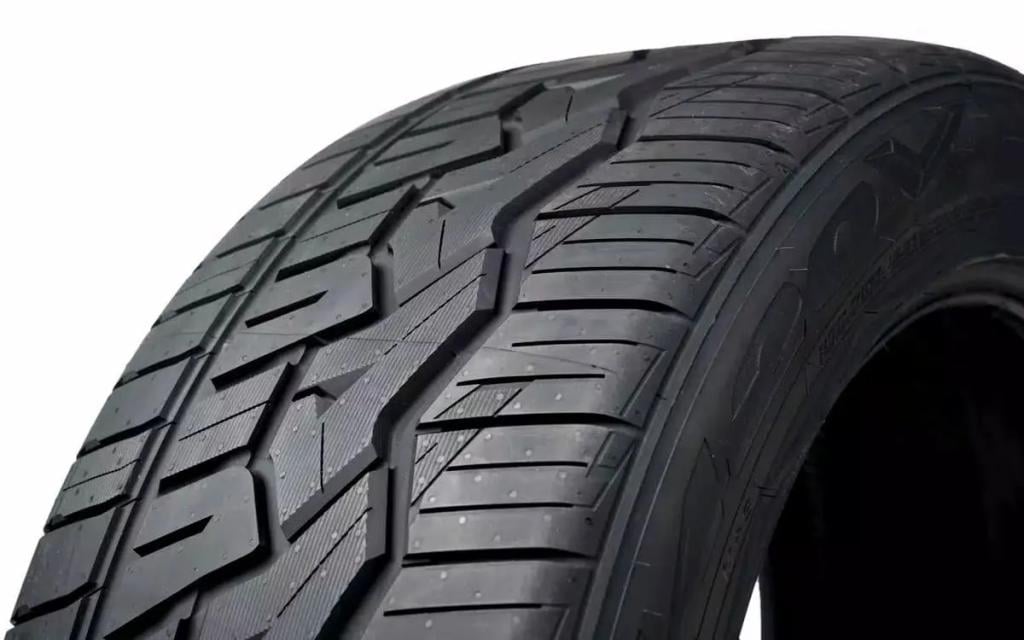
All-season tires are designed for year-round performance—not just winter terrain. As a result, they offer decent traction in most conditions but are less specialized in snow and ice than dedicated winter tires.
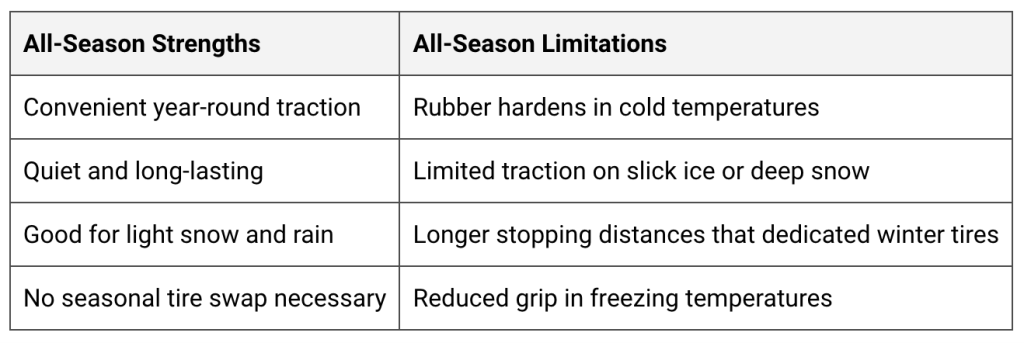
While all-season tires work well for mild winters, they tend to struggle in more extreme conditions, like snow and ice.
Winter Tire Strengths and Weaknesses
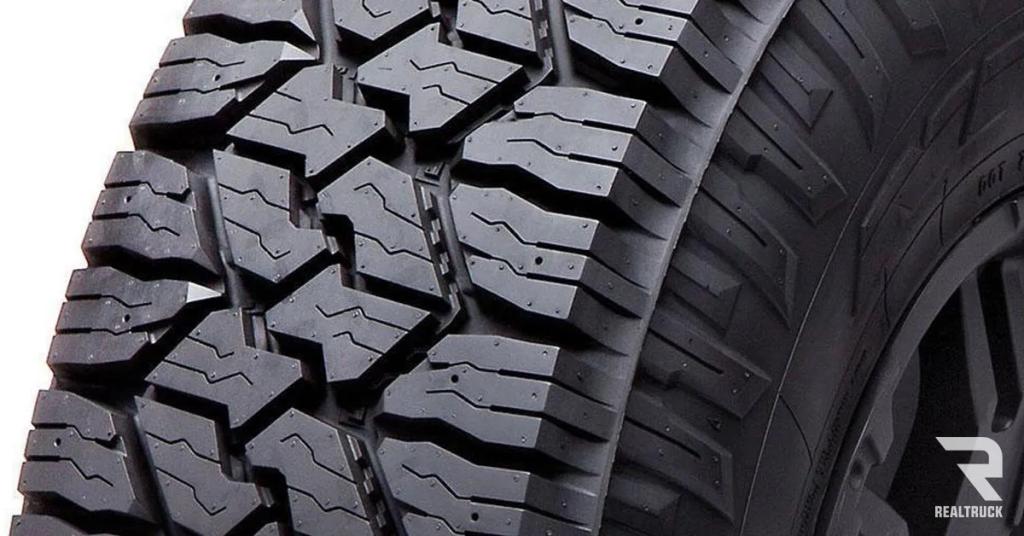
Winter tires, often called snow tires, are engineered specifically for winter conditions, like cold weather and snowy roads. They use a softer tread compound and strategic tread patterns for maximum cold-weather traction. However, these changes aren’t ideal when the snow thaws.
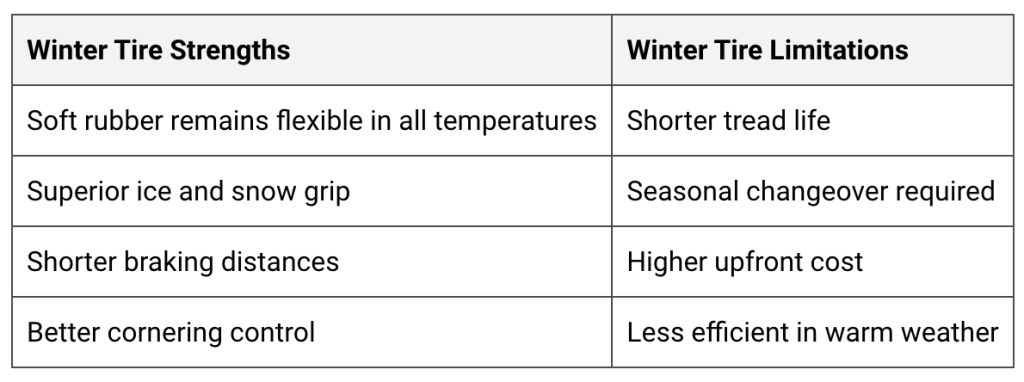
Winter tires dramatically improve traction and safety in cold conditions, though their performance falters when the weather heats up and roads dry out.
Scenario Comparisons
Different winter conditions favor different setups. In this section, learn whether AWD with all-season tires or FWD with winter tires is preferred, depending on the road conditions, temperatures, and type of driving you’ll be doing.
Light Snow and Cold, Dry Roads
In these conditions, FWD with winter tires is preferred. Winter tires utilize a softer compound that helps retain grip on cold pavement, whereas all-season tires may stiffen and lose grip.
Deep Snow and Slush
Here, AWD with all-season tires gets the slightest edge. While all-season tires may not offer as much control as winter tires, the clawing and biting action of an AWD vehicle allows it to retain momentum through unplowed snow and slush that’d otherwise stop an FWD vehicle in its tracks.
Ice, Packed Snow, and Freezing Rain
When ice is present on roads, traction matters more than speed. For this reason, go with FWD with winter tires in ice, packed snow, and freezing rain. Winter tires stop shorter and corner with more control, making them the better option in these extreme weather types.
Hills, Unplowed Roads, and Rural Routes
AWD with all-season tires takes the victory on hills, unplowed roads, and rural routes. The drive type’s ability to distribute power to all four wheels makes climbing grades and maintaining momentum much easier.
Urban Commuting
In situations where fuel economy matters, especially in stop-and-go traffic, FWD with winter tires is the victor. The added traction when braking and turning, paired with better fuel economy, makes a FWD offering far more effective.
Regional Considerations
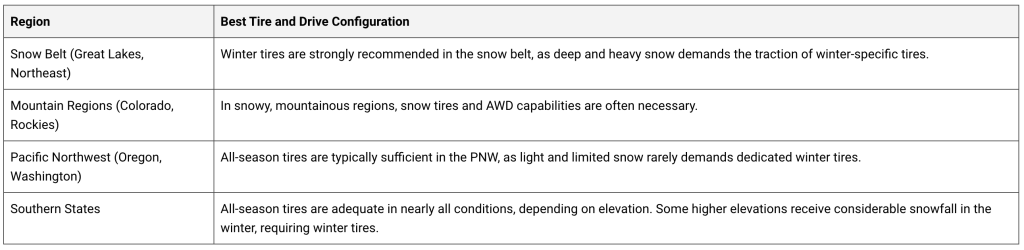
Depending on the region you live in, specific drive configurations and tire setups are superior to others. Check out the table below to compare some of the most demanding areas:
Which Setup Wins Overall?
There’s no one-size-fits-all answer to traction—but understanding the difference between tire and drivetrain performance makes the decision simpler.
For safety, control, and confidence on the road, FWD with winter tires generally outperforms AWD with all-season tires—especially in conditions where braking and turning matter more than maintaining speed.
That said, both drive and tire configurations have their time and place. In general, AWD and all-season tires excel in deep snow and hilly terrain, whereas FWD with winter tires shines in icy and stop-and-go conditions.
If you can choose only one upgrade, tires typically offer the most significant performance gain.
Frequently Asked Questions
Q: Is AWD with all-season tires safe for winter?
A: Yes—with caution. It’s safe in light snow but not optimal for ice or emergency braking.
Q: Do I need winter tires if I have AWD?
A: Yes. AWD helps acceleration, not stopping. Winter tires improve grip in every direction.
Q: How much better are winter tires than all-season tires?
A: Winter tires can reduce braking distances by 20%-40% on snow and ice and significantly improve cornering grip.
Q: What if I live in a region with mild winters?
A: Quality all-season tires are often sufficient if snow is rare and roads are quickly cleared.
Q: Are winter tires worth the cost?
For frequent winter driving, absolutely. They improve safety, reduce accident risk, and can extend the life of your all-seasons.
Q: Can AWD get stuck in snow?
A: Yes. AWD provides power, not traction. Once tires lose grip, even AWD can’t get you unstuck.
This story was produced by RealTruck.Com and reviewed and distributed by Stacker.