Spring break 2026: Travel season risks spread of measles across U.S., state officials say

Spring break 2026: Travel season risks spread of measles across U.S., state officials say
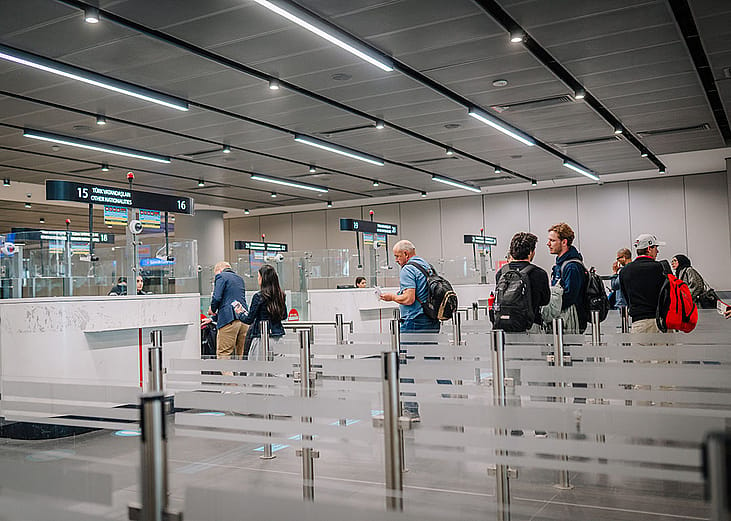
The spring break travel season is underway, with tens of thousands of people every day clogging U.S. airports in their quest for sun, surf, theme parks, big city excitement, and other getaways.
It’s a scene that worries public health officials amid another bad year for measles across the country — and the potential for increased spread of the highly contagious disease during this busy travel period.
“It feels like whack-a-mole right now,” said Scott Thorpe, executive director of the Southern Alliance for Public Health Leadership. “Just as the numbers are dying down in South Carolina, you see this big jump in cases in Utah. Then you see cases starting to pop up in other places across the South.”
State health department officials in multiple states — including California, Utah, Colorado, Georgia, and South Carolina — told Healthbeat they are concerned about spring break travel and the potential for measles to spread within and between states. In this article, Healthbeat outlines the state officials’ perspective for the upcoming spring break travel season.
Driving those concerns: Spring break is happening with the United States on a trajectory to exceed last year’s record-breaking number of measles infections — the worst since 1992.
This year the Centers for Disease Control and Prevention has already logged 1,362 confirmed cases of measles across the country through mid-March, mostly among unvaccinated children and teens. In less than three months, that’s more than half of the 2,284 measles cases confirmed during all of last year.
Since January, there have been at least 14 new measles outbreaks identified across the country, including in Florida, California, Washington state, Texas, and Colorado. These are in addition to ongoing outbreaks that began last year in South Carolina, Utah, and Arizona. Across the country, 30 states have reported at least one measles case this year, CDC data show.

Measles, which is one of the most contagious viruses for humans, is transmitted through the air when an infected person breathes or coughs. The virus can linger in a room for up to two hours.
The disease is preventable with vaccination. Two doses of the measles-mumps-rubella shot are 97% effective in preventing measles; one dose is 93% effective.
Most of those being infected with measles aren’t immunized. Nationwide, about 92% were unvaccinated or had an unknown vaccination status, according to CDC data.
“As vaccination rates have just broadly declined across all these communities, it’s just incredibly hard to stop. And that’s just going to get worse,” Thorpe said. “Short of something crazy happening, we’re absolutely going to blow through what our numbers were for last year.”
The contribution of spring break exposures to these national measles case counts won’t be known for several weeks.
After a susceptible person is exposed to the virus, it can take one to three weeks for them to start falling ill with initial symptoms that may seem like a cold or the flu. By the time the hallmark measles rash appears, they will have been infectious for four days — potentially spreading the virus to even more people.
“Everybody’s on high alert,” said Pat Endsley, president-elect of the National Association of School Nurses.
Top spring break destination Florida is No. 3 for measles
Dr. Rana Alissa, president of the Florida chapter of the American Academy of Pediatrics, told Healthbeat she’s very concerned about the potential for spring break travel to spread measles infections — especially in her home state, which already has measles cases in several communities, plus a large outbreak linked to a university.
Florida — with 116 confirmed measles cases since January — ranks No. 3 in the nation for 2026, behind South Carolina and Utah, which continue to battle outbreaks that began last year, according to the latest CDC data.
“Everyone wants to come to Florida,” Alissa said. “It’s always crowded. Orlando is going to be crazy, Daytona Beach, Clearwater, Miami.”
With these crowds comes an increased risk that some of the people are carrying measles. “It is very scary,” said Alissa, who is advising unvaccinated infants and children, as well as people with weakened immune systems, to avoid crowded areas because of the risk of measles.
Besides a fever and rash, measles can cause serious and sometimes life-threatening complications, including pneumonia and dangerous swelling of the brain, as well as “immune amnesia,” which increases a person’s susceptibility to other diseases in the future. Pregnant women and their babies are also at increased risk of complications from measles.
In addition to being a top state for measles this year, Florida is a perennial spring break hot spot. Cities throughout the state continue to be among the nation’s top spring break destinations, according to 2026 booking data from AAA and Booking.com.
At Tampa International Airport, the spring break travel surge is underway, with about 75,000 to 80,000 passengers a day expected through April 13. The biggest travel day, the airport predicts, will be this coming Sunday, when 90,000 travelers are expected to pass through the airport.
In Orlando, airport officials expect this week to bring some of their highest passenger volumes of the spring break period, with nearly 212,000 passengers arriving and departing last Sunday, plus another 205,000 passengers on Monday.

Florida health department won’t discuss large measles outbreak
Officials with the Florida Department of Health did not answer questions from Healthbeat since March 6 about the risks posed by spring break travel to and from the state, and what kinds of measles prevention and control activities the department is performing.
The department’s top official, Florida Surgeon General Joseph Ladapo, last fall announced plans to end all school-age vaccine requirements in the state, a move that has faced resistance in the legislature. In 2024, during a measles outbreak at a South Florida elementary school, Ladapo sent a letter to parents allowing them to keep sending their unvaccinated children to class, despite their risk of infection.
Most of Florida’s measles cases this year are part of a large outbreak linked to Ave Maria University in southwest Florida’s Collier County, about 35 miles northeast of Naples. At least 98 confirmed and suspected measles cases have been diagnosed in the county through March 7, according to state health department data. Five of those cases were reported during the first week of March, the data indicate.
Despite repeated requests, officials at the Catholic university did not respond to Healthbeat’s questions, including about the current status of the outbreak and any actions being taken to address the potential health impact of the school’s Easter break, scheduled for April 2-6.
Florida’s health department also wouldn’t discuss the university’s outbreak or answer Healthbeat’s questions about other locations in the state where ongoing spread of measles may be occurring, and how many people statewide are in quarantine because of measles exposures. While such information — which doesn’t involve identifying specific patients — is routinely made public in other states, the Florida health department’s media relations team said it was unable to discuss ongoing epidemiological investigations because of state confidentiality statutes.
The department’s data show at least 12 other Florida counties have reported confirmed or probable measles cases since January. They include the Tampa-St. Petersburg area, where six cases have been diagnosed in Pinellas County, and two more in Hillsborough County. In the Jacksonville area, Duval County has reported six cases; in the Pensacola area, Escambia County has identified five cases; and in South Florida, two cases have been diagnosed in Broward County and one in Miami-Dade County.
Concerns about measles extend beyond spring break hot spots
In response to interview requests and questions about rising U.S. measles cases and spring break travel sent earlier this month to the CDC, a spokesperson for the U.S. Department of Health and Human Services emphasized the risk of measles being imported from other countries.
“The risk of measles remains low for most of the United States due to high population-level immunity from MMR vaccination,” press secretary Emily Hilliard said in an email Tuesday night to Healthbeat. “That said, anyone who is not protected against measles is at risk if exposed. Since measles is common in many countries, unvaccinated travelers can bring measles to the United States at any time, and it can spread to other people who are not protected against measles.”
Hilliard said the CDC is supplying technical support and funding to states dealing with outbreaks and that vaccination is the best protection, “especially if you plan to travel internationally or to a place with a measles outbreak.”
While international travel can play a role in U.S. measles cases, according to CDC data, only nine of the 1,362 confirmed U.S. measles cases since January involved international visitors; last year just 25 of the 2,284 confirmed cases were international visitors. In both years, most of the measles cases across the country have involved outbreaks where the virus has spread from person to person within U.S. communities with low vaccination rates, such as those that have occurred in South Carolina, Texas, Arizona, New Mexico and other states.
As a growing number of states are already dealing with measles cases this year, officials at several state health departments expressed concerns about the risks posed by spring break travel.
This year California has had three outbreaks of measles — the first outbreaks in the state since 2020. Some of these California cases are linked to an unvaccinated toddler who had recently traveled to a measles outbreak area in South Carolina.
As of Monday, California has had 29 confirmed cases of measles; two have been hospitalized, according to the California Department of Public Health.
“International or domestic travel during spring break carries a risk of transmitting measles to Californians,” the department said in an email. “CDPH continues to closely monitor measles and to work with medical and public health partners to limit its spread during and after the spring break travel season.”
Georgia Department of Public Health spokesperson Nancy Nydam Shirek said that while people who are not immunized against measles are at high risk any time they are exposed to the virus, “that risk increases if they visit crowded tourist destinations, travel through airports, or go to areas with ongoing measles outbreaks.”
Two cases of measles have been reported this year in Georgia. One involved a baby too young to be routinely vaccinated who became infected during international travel. State health officials said they don’t know how the other case, a resident of Bryan County near Savannah, became infected and they cannot rule out unrecognized spread of the virus within the state, Healthbeat reported earlier this month.
In Utah, the spring break travel surge comes at a precarious time in the state’s measles outbreak, which began last year and has resulted in 443 reported infections as of Tuesday.
“What is concerning to me is we are seeing spread of this disease through our entire state,” Dr. Leisha Nolen, Utah’s state epidemiologist, said at a media briefing earlier this month. “For a while it was really limited to the southern part of the state, but it is now expanding, and we are having people diagnosed in every part of our state. And these are not just mild infections.”
Measles infections in Utah have resulted in more than 120 people going to emergency rooms, 31 needing to be admitted overnight, and three needing treatment in an intensive care unit, she said.
While the disease has spread in a variety of settings, Utah officials said cases involving school activities are noteworthy.
“We have definitely seen people get infected with measles from wrestling events, from dance-drill teams and from basketball. So we really encourage people to protect their children,” she said. “The measles vaccine is the best thing to protect your child. It is how we can stop this infection.”
In Colorado, where as of March 19 12 cases of measles have been identified along with multiple locations where infectious people potentially exposed others, state health officials said they are working to raise public awareness through media campaigns and provider webinars. The department also is doing direct outreach to families whose children are overdue for their MMR vaccines. In 2025 and 2026, this outreach resulted in 48% of the contacted families getting their children immunized, the department said.
South Carolina shows how holiday breaks can fuel outbreaks
“Measles is spread very easily to anyone who is susceptible,” said Dr. Linda Bell, state epidemiologist in South Carolina, where officials worry spring break travel could reignite an outbreak that has sickened nearly 1,000 people since last fall.
The outbreak has slowed to a trickle in recent weeks. After months of tracking cases, quarantining exposed people, and urging vaccination, the state health department announced Tuesday just one new measles case, bringing the total to four cases identified in the past week.
“The risk of spread is increased by the number of people exposed,” Bell said, “so things like air travel and people visiting tourist attractions during holiday breaks are a concern.”
It’s a risk South Carolina officials watched play out in mid-January, when measles cases surged to hundreds of cases a week after the winter holiday break period where gatherings with families and friends fueled the spread of the disease – not only within South Carolina, but to other states. The department’s measles control efforts were further hampered because outbreak investigators couldn’t get contact information from schools during winter break closures, delaying the quarantine of exposed students, an issue the department is trying to fix for spring break.
As infected South Carolina residents traveled the country during the winter break period, internal health department records show they exposed others to measles at travel convenience stores in Georgia and Florida, at a hotel and a youth conference in Kentucky, and at a hospital and a hotel in Florida, Healthbeat revealed last month.
Many schools in Spartanburg County, the epicenter of South Carolina’s outbreak, are scheduled to close for spring break the week of April 6-10.
State officials remain concerned there could be another surge in cases.
“It is far too early for us to let our guard down,” Bell said on March 18. “We will see what happens with spring break.”
The problem is there are still many more unvaccinated people in South Carolina and across the country for the virus to infect.
To stop measles from spreading within local communities, 95% of the population needs to be vaccinated. But in most states, statewide vaccination rates among kindergartners have fallen below that “herd immunity” level, according to CDC data. And even where vaccination rates may seem high on a statewide or countywide level, pockets of unvaccinated children and adults within localized communities can still fuel outbreaks, experts said.
This story was produced by Healthbeat and reviewed and distributed by Stacker.