Way
1 / 1Why is sustainable traveling not yet at its peak?
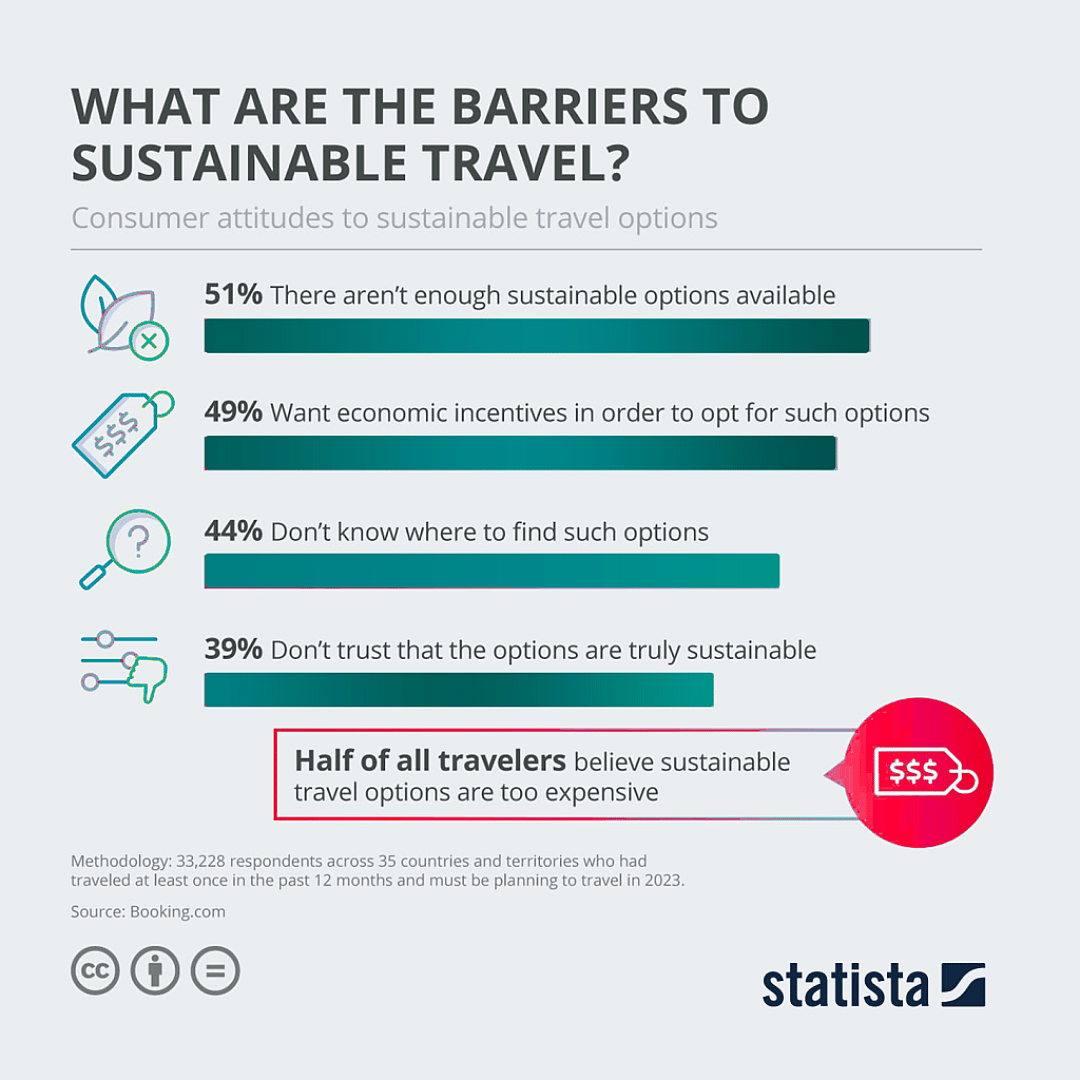
Sustainable traveling looks good on paper, but it's not perceived as a more convenient and practical option. People want to travel more sustainably, but they give in to the barriers of sustainable traveling. Despite the availability of eco-friendly travel options, half of all travelers find them insufficient or prohibitively expensive. Many also believe these options are difficult to find or not credible enough. While travelers recognize the importance of climate change, there is still a gap between impact and action.
Based on Booking.com's Sustainable Travel Report 2023, 80% of travelers confirm that sustainable travel is important to them. And 70% accept that it's high time to take sustainable travel seriously.
Impact of news and social media
News is one way to reach people and increase awareness of sustainable traveling. But unfortunately, the news and social media fail to communicate its necessity. It is stuck in the cobweb of marketing and politics, pushing such sensitive topics to the back burner. Only 53% of the survey acknowledged that news had influenced their decisions to adapt to eco-friendly traveling. At the same time, almost 43% are unaware of it despite the exposure to news and social media.
Impact of economy
The economy also makes it difficult to be more conscious about when, where, and how they travel. 64% believe the cost-of-living crisis will worsen in the next six months. At the same time, 49% have almost given up on the thought that the planet can even be saved at this given point in time.
The traveling crowd is a mix. 49% believe sustainable travel options are too expensive, while 43% are willing to spend for it. And 47% are willing to get more tips on it so that they can save the planet while staying within their budget. 42 – 49% from different demographics prefer discounts and economic incentives to opt for eco-friendly options.
Gaps of sustainable travel
To travel sustainably, people must practice the same at home, and there should be enough platforms for support. 74% want travel companies to offer more eco-friendly travel options. 51% believe there are not enough options available. 44% of travelers are clueless about finding more options. Only 16% in the USA practice sustainability at home.
65% would choose to stay in a specific hotel if they knew it had a sustainable accreditation or label. And 59% want to filter their options for those with a sustainable certification the next time they book. While 69% are interested to learn more about why specific options are perceived as more sustainable. 44% like it when brands offer products or services that are more sustainable, but it doesn't always influence their decision. 39% don't trust that the sustainable travel options labeled are truly more sustainable. Meanwhile, 11% only buy products and services from brands that promote sustainability. And 30% are always on the lookout for brands that promote sustainability.
Bottom line
Sustainable travel is an ongoing trend in the tourist sector that promotes environmentally responsible travel habits to reduce environmental harm, help local communities, and preserve cultural and natural resources. Travelers can lower their carbon footprint and contribute to a more sustainable future by using eco-friendly transportation, staying in eco-conscious hotels, and participating in responsible tourist activities.
Sustainable travel benefits the environment and local people and gives the traveler a more real and meaningful travel experience. Individuals must be mindful of their travel choices and make responsible decisions to ensure that tourism may continue to be a good force for cultural exchange and economic development while not jeopardizing the planet's well-being.
This story was produced by Way and reviewed and distributed by Stacker Media.