No test can confirm perimenopause. Doctors say you should get one anyway
If you’re in your mid-40s or older and having symptoms like hot flashes, brain fog, weight gain, sleep issues, and more, you might be wondering if a blood test can tell you whether you’re in perimenopause.
It can’t. Hormone levels fluctuate too widely during this transition for any single test to tell you where you are on your menopause journey.
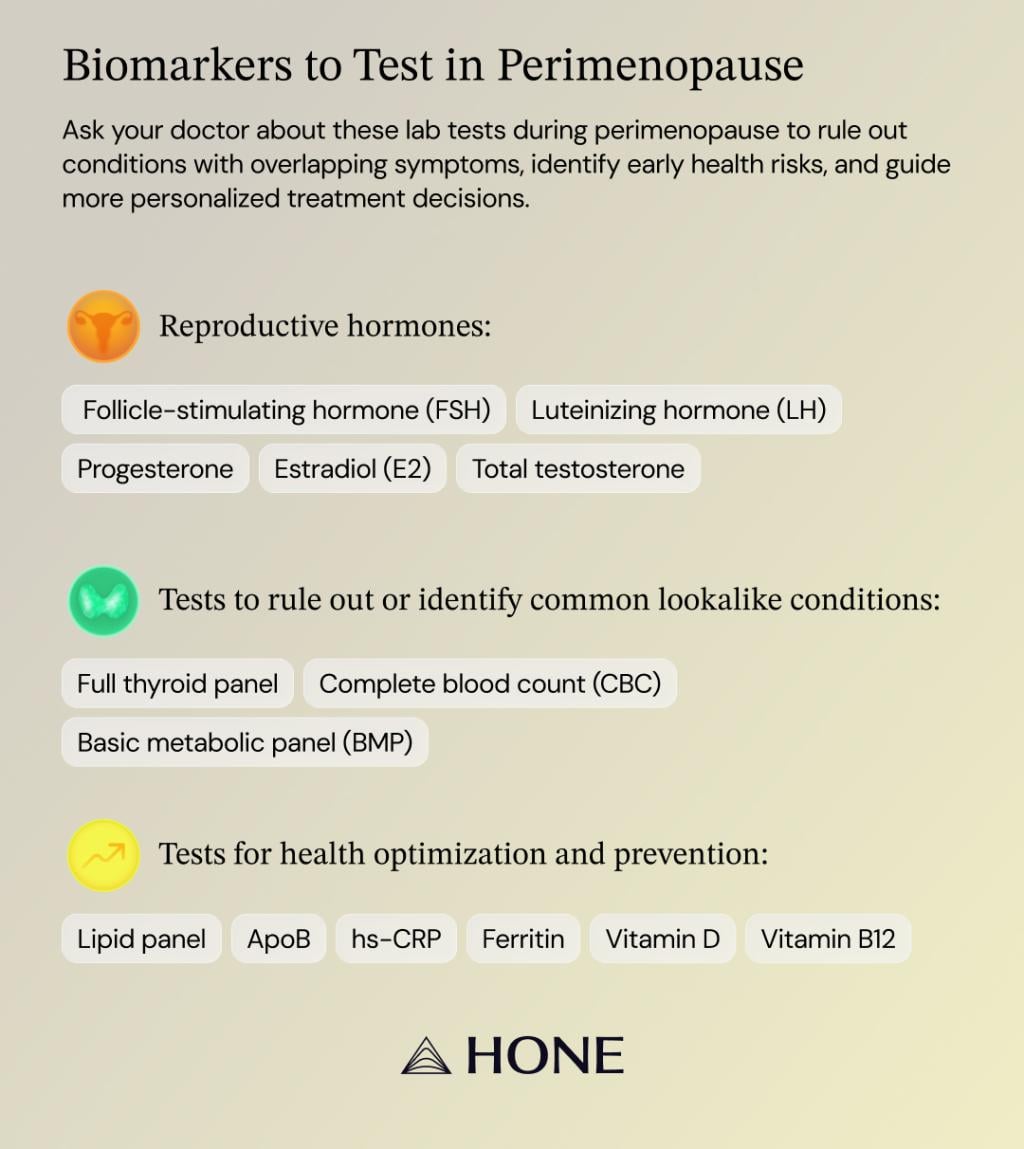
But doctors strongly encourage getting a blood test during perimenopause to rule out conditions with overlapping symptoms, identify early health risks, and guide more personalized treatment decisions.
The goal of a blood test isn’t to label perimenopause. It’s to use data to make better decisions about symptom relief and long-term health.
In this article, Hone Health explains how to think about perimenopause testing — and use it to your advantage.
What Is a “Perimenopause Test”?
Perimenopause is a clinical diagnosis, which means a doctor identifies it based on your symptoms, age, health history, and overall hormone patterns.
Blood tests don’t accurately indicate perimenopause because estrogen and progesterone can be sky-high one day (or even one hour) and sink the next. A blood test will reflect your hormone levels only in the moment, which makes it unreliable as a diagnostic tool.
Instead, doctors diagnose perimenopause by looking at the full picture of current symptoms and long-term health history, including:
- Symptoms: Hot flashes, brain fog, disrupted sleep, fatigue, weight or body composition changes, thinning hair, vaginal dryness, skin changes, headaches, urinary tract infections, mood changes, and irregular periods.
- Age: Perimenopause is unlikely at 25, but common in women in their 40s and 50s.
- Reproductive hormone patterns over time: Bloodwork can evaluate your levels of estrogen, progesterone, testosterone, follicle-stimulating hormone (FSH), and luteinizing hormone (LH) based on where you are in your menstrual cycle. For example, low progesterone late in the cycle may suggest that you’re not ovulating consistently, which is a sign of perimenopause.
- Menstrual and reproductive history: An erratic monthly hormone cycle leads to inconsistent menstruation as you age, with heavy bleeding (including flash periods), as well as lighter or more unpredictable spotting. You might compare the menopause transition to a roller coaster: Your reproductive years are the kiddie ride, when your hormone levels are predictable and steady. Perimenopause is the wild one, full of drops, loops, and sudden turns. Menopause is when the track finally levels out. So, if your always-regular cycle has been all over the place, that’s important for your provider to know because it’s a telltale sign of the ups and downs typical in perimenopause.
- Other biomarkers: Conditions like iron deficiency and thyroid disorders can mimic perimenopause symptoms, and won’t be identified by hormone testing alone.
Understanding Hormone Test Results
When you look at lab results for your hormones, it’s important to know what “normal” actually means:
- Normal ranges are statistical averages drawn from large populations.
- Abnormal results don’t automatically mean menopause.
- Perimenopause symptoms can happen even when you fall within “normal ranges,” because they’re designed to spot extreme abnormalities, not to reflect how you feel or whether your hormones are changing.
What does matter are patterns seen across multiple blood tests. Doctors might see trends such as whether ovulation is becoming inconsistent, estrogen is swinging more dramatically, or levels are trending downward altogether. Those trends — when considered alongside your symptoms, cycle changes, age, and overall health — can help doctors distinguish between early perimenopause, later transition stages, and other conditions that may require a different approach.
Why Comprehensive Lab Testing is Important in Perimenopause
You don’t need bloodwork to diagnose perimenopause but skipping it means missing critical information about your health during a period of rapid change.
Perimenopause is a turning point in your health. As hormones fluctuate and gradually decline, they influence far more than your menstrual cycle. Metabolism, heart risk, bone density, mood, sleep, and energy regulation all begin to shift, often before problems appear on the surface.
Comprehensive labs offer a baseline snapshot of your overall health, helping your doctor tell the difference between perimenopause and other conditions with similar symptoms, identify future health risks early, and make more informed decisions about treatment and prevention.
Rule out conditions with symptoms that mimic perimenopause
Perimenopause isn’t the only condition that can cause symptoms like fatigue, brain fog, or mood changes. Lab testing helps uncover what’s actually driving symptoms, so treatable conditions aren’t missed or brushed off as “just menopause.”
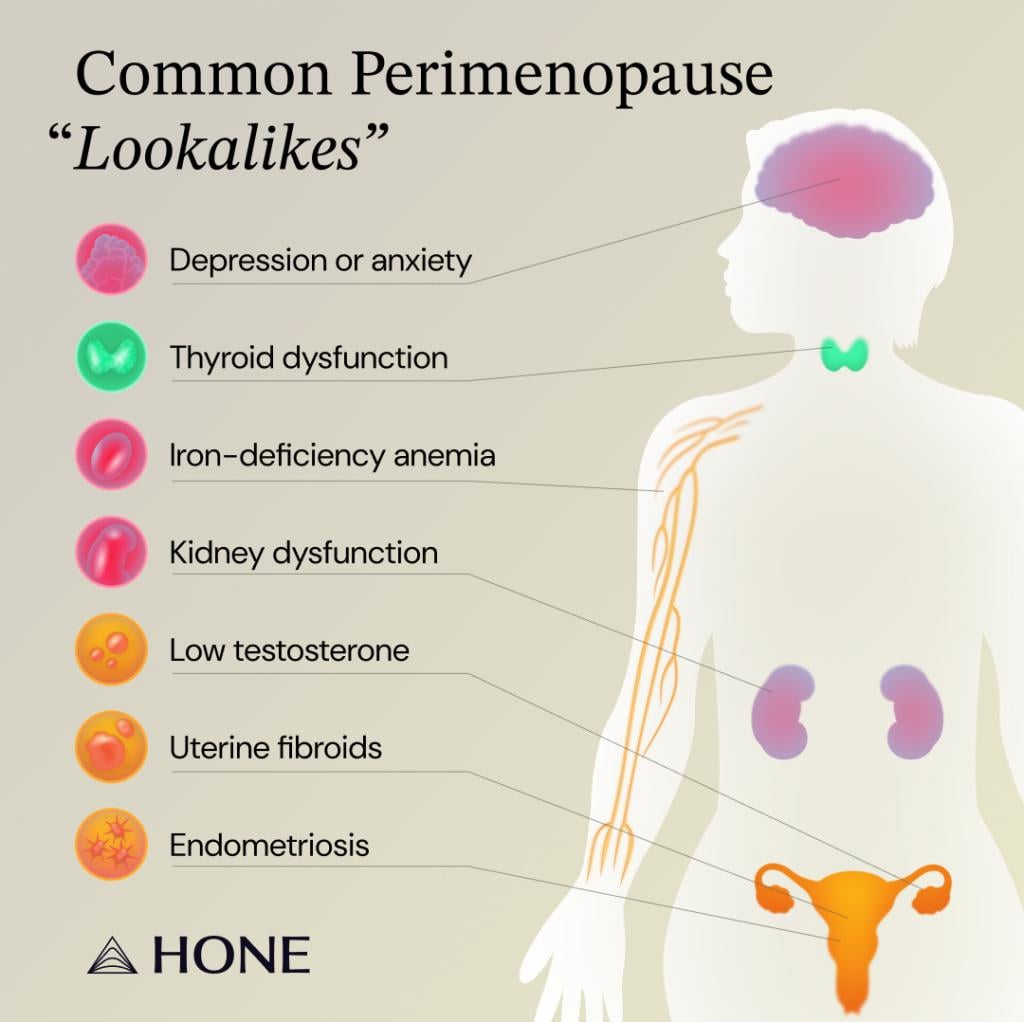
Common perimenopause “lookalikes” and their symptoms include:
- Thyroid dysfunction. Both over- and underactive thyroid can cause fatigue, hair loss, increased irritability, cold intolerance, and skin changes. Underactive thyroid (hypothyroidism) can also cause weight gain.
- Iron-deficiency anemia. Low iron tends to cause fatigue, hair loss, cold intolerance, brittle nails, headaches, and poor sleep.
- Low testosterone. For both women and men, low levels of testosterone cause fatigue, weight gain, low libido, brain fog, and poor mood.
- Uterine fibroids. Uterine fibroids cause heavy periods, bleeding between periods, low iron, pain during sex, and frequent urination.
- Endometriosis. This chronic disease causes pain during sex, heavy periods, and bleeding between periods.
- Depression or anxiety. Mood disorders are known to cause low energy, irritability, sadness, poor sleep, and brain fog or difficulty concentrating.
- Kidney dysfunction. Kidney trouble can trigger poor sleep, dry skin, low energy, difficulty concentrating, and frequent urination.
Get relief from symptoms
Once testing reveals what’s contributing to your symptoms, your treatment can be more targeted and more effective.
If you’re in perimenopause, hormone replacement therapy (HRT, also called menopause hormone therapy or MHT) is one of the most effective tools for easing the disruptive symptoms of perimenopause and menopause. HRT may include estrogen, progesterone, testosterone, or a combination, carefully selected to match your symptoms, health history, and goals.
In the short term, HRT can be life-changing. It often improves sleep, stabilizes mood, restores energy, and significantly reduces hot flashes and night sweats. Many women also notice improvements in brain fog, joint pain, vaginal dryness, and overall quality of life.
More importantly, when started at the right time and tailored to your individual needs, hormone therapy can offer meaningful long-term protection from chronic, life-threatening conditions, supporting bone density, preserving muscle, and reducing risk factors for cardiovascular disease.
If testing reveals other issues, such as a thyroid disorder, thyroid medication will help resolve symptoms, which can include fatigue, weight gain, constipation, dry skin, depression, and poor memory for hypothyroidism (low thyroid hormone).
Catch other health risks early
Your body is full of estrogen receptors, so when levels decline, other systems are impacted. Women in perimenopause often experience changes in cholesterol levels, insulin sensitivity, body composition, iron status, and inflammatory markers. Thyroid function may shift, and metabolic risk can quietly increase even before symptoms show up.
Comprehensive blood testing is an early warning system. It helps doctors spot changes in heart or metabolism — and intervene with lifestyle changes, medication, or close monitoring.
This story was produced by Hone Health and reviewed and distributed by Stacker.