
Since consumers now expect AI platforms to answer specific questions like "Who’s the best realtor near me?" without having to comb through pages of search results, brand content that gets surfaced in those responses has the potential to supercharge AI visibility.
Brands can capture these high-intent users by leveraging what LLMs love: context that's highly relevant and personalized.
Search Atlas research that was published earlier this year found that LLMs prioritize content that matches local intent more than a business' overall search presence. And according to a 2026 survey published by Yext, 28% of respondents had tried a new local business in the preceding six months because of a recommendation they got from AI.
Yet most brands still write generic content without a geographic lens and wonder why they're not keeping up with the competition.
If your brand already has proprietary first-party data, you won't need to write a thousand city-specific landing pages or predict local intent. You already have what it takes to show up in AI search.
Leveraging "near me" search queries
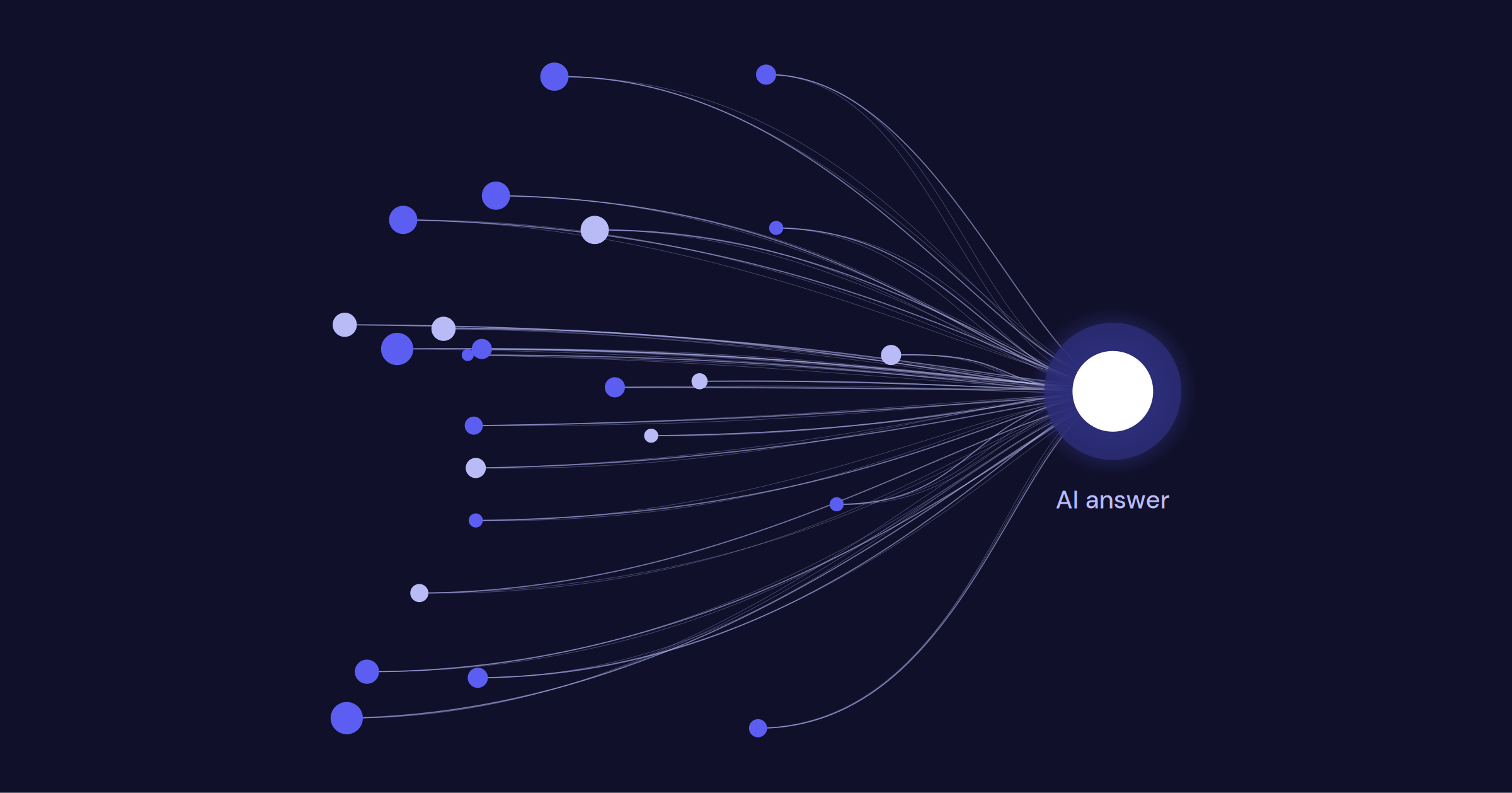
Brands aiming for AI visibility have an opportunity to surface in geographically specific answers using localized content. AI search platforms surface these answers by synthesizing many small, specific data points from across a variety of content formats, like user reviews, local business listings, and forum threads.
Notice that brand pages with broad, universal content aren't on that list? Understandably, most major brands prioritize content geared toward their largest audience. But this kind of content doesn't signal relevance to LLMs that are searching for local answers.
LLMs favor specific, sourced, and original claims over generic marketing copy. For instance, including statistics and specific geographical areas like cities or landmarks in your copy (i.e. "Customers in Phoenix are 40% more likely to X") is exactly the kind of granular, attributable claim that gets pulled into AI-generated answers.
The secret is to mine the geographic signal already sitting in your data. In the past, this kind of data may have only felt relevant for ad campaigns. But data sets derived from CRM records and customer surveys can be turned into sought-after content that AI models can reference and, ideally, cite.
How to use your local data for AI visibility
Giving your data a glow-up for AI visibility may be less of a slog than it seems.
Step 1: Audit the local data you have for relevant nuggets
Start with data around where your customer segments are located, then dig deeper: How do customer preferences vary by region? Also, if your brand regularly commissions original research, you'll likely have enough detailed data to slice by city or region and produce more locally specific findings.
But if you don't have robust proprietary local data — or you want to validate your internal findings — a great workaround is to use public data sets from government or census sources, plus openly available statistics on local economies or industries. When you layer your own analysis on top to add local relevance, your brand's original analysis becomes proprietary (and authoritative), which LLMs love. This is a great example of a brand using third-party data to its advantage.
Step 2: Operationalize your data segments
To make your data workable and citable, segment your existing customer or survey data by geography and add those regional cuts to a national story. For instance, including data about how long it takes to buy a house in each state is one way to make a national story on the housing affordability crisis locally relevant.
Structure your content in a templated way so that these key stats, named locations, and dates are clear, replicable, and easy for LLMs to scan.
Step 3: Gain trust in your local insights with third-party pick-ups
Stacker's research shows that freshness correlates with higher AI citation rates, so it's important to publish local stories frequently. But adding a layer of third-party validation is also key to building visibility.
Historically, distributing batches of local stories took considerable time and manual work. Even then, they might get buried under other stories.
Stacker Local is built to ease the hassle around distributing geographically specific stories. You can upload a templated story and let the earned distribution newswire do the rest. Your local content will be packaged and sent to regional publishers who trust the quality of stories vetted by Stacker. When these locally targeted stories are picked up by trusted media outlets, your brand's content becomes more likely to be cited in those specific, regional AI queries. Plus, the more your brand shows up — even in niche queries — the more it reinforces the signal to LLMs more broadly that your content is credible and authoritative.
As this kind of localized coverage accumulates across more cities and publications, it starts to function less like individual placements and more like a distributed footprint — one that can be cross-referenced and substantiated each time a new query touches that region. Brands that treat local content as a consistent pipeline, rather than a one-off campaign, are the ones most likely to become the default citation when "near me" queries get more specific.

Diana Shishkina is Stacker's Senior Lead of Content Operations. She has worked in content for over 8 years, contributing to Stacker as a writer, editor, data journalism lead, and content strategist. In her current role, Diana works in both editorial operations and strategy, analyzing our network data and publisher needs in order to directly help clients across different industries construct digital content that meets their SEO and GEO goals.