For brands looking to boost their visibility in AI search, optimizing for citations may be the winning ticket.
We recently conducted an analysis of 456 stories that were distributed on the Stacker network and found that AI responses that included a brand citation were more than three times as common as those that mentioned a brand by name.
And while we can't pretend to know everything that goes into what makes a story citation-worthy — especially as algorithms continue to evolve — we've observed a few patterns in our own data that are worth highlighting.
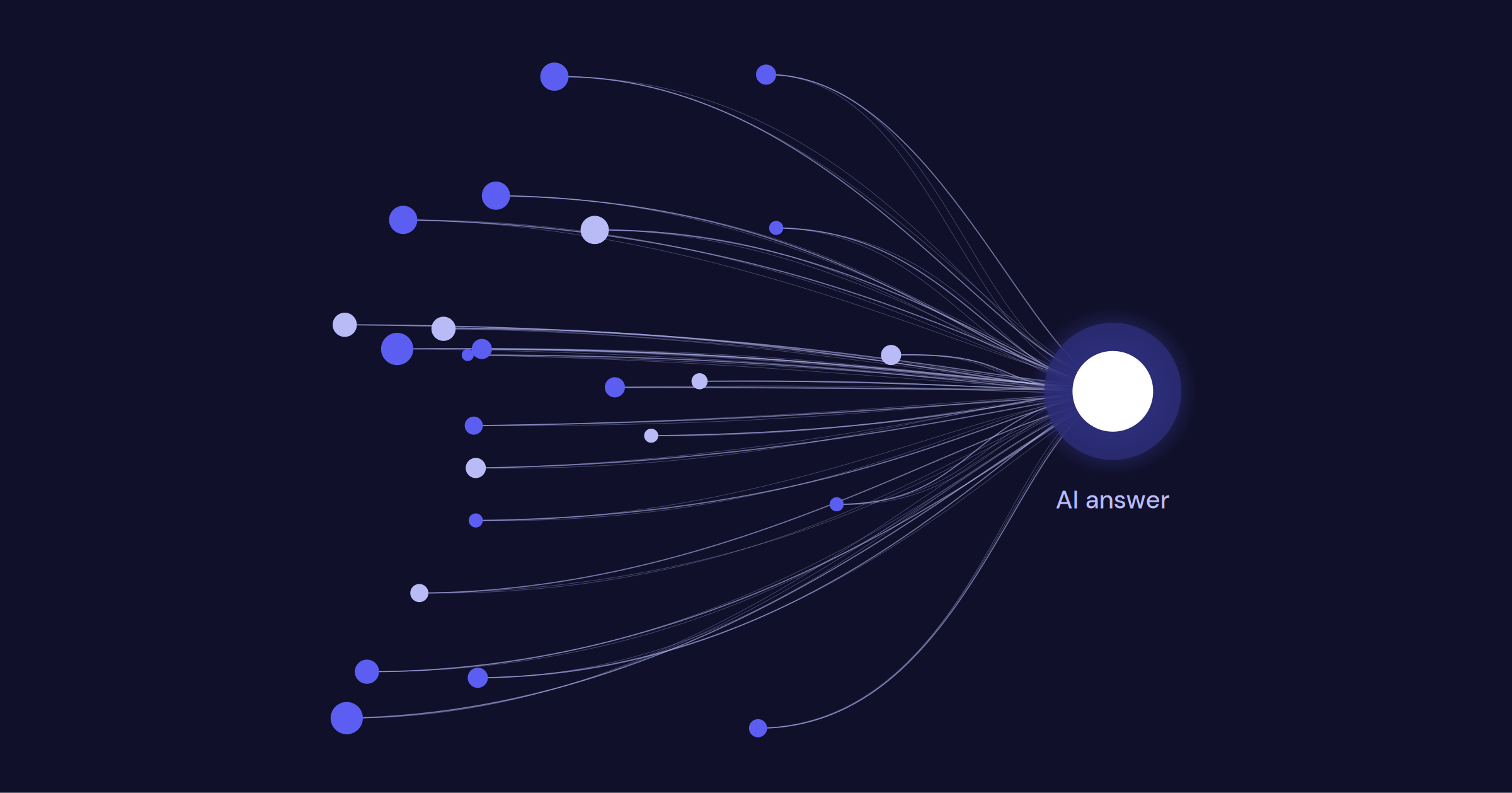
Getting brand content cited by AI comes down to having credible, original research and data that is current and highly specific. Distributing content through a network of high-authority publishers also increases the surface area where LLMs can encounter your brand.
The performance of specific tactics and channels will go up and down as the algorithms and our knowledge of them evolve over time. Take the recent drop in ChatGPT's Reddit citations as an example: while Reddit had consistently been named one of LLMs' favorite sources to cite for at least a year, recent analyses have found that the picture is more nuanced, and that it may be falling out of favor.
But the practices that make a piece of content citation-worthy today are also the same that make your stories valuable and your brand memorable to your intended audience, so they're worth studying.
How distribution increases the chance of citation, according to Stacker's research
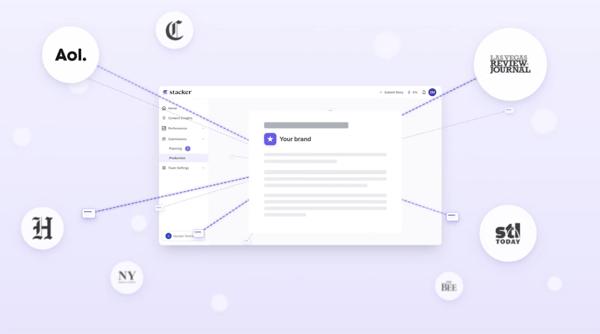
There has been ongoing industry discussion of a link between earned media and AI visibility. Stacker enables brand mentions on a large scale thanks to its network of hundreds of publishers who syndicate brand content on their own websites. That means we're in a unique position to study what happens to brand presence when a piece of content is republished across many high-authority publications.
At the end of 2025, Stacker partnered with Scrunch to study this link and found that earned media distribution can increase AI citations by up to 325%, when comparing network citations with those earned by the brand alone.
Stacker and Scrunch studied this impact together by looking at how eight stories performed across five major AI platforms after they were distributed on the Stacker network, comparing how many citations went to the brand's domain with how many went to the syndicated version of the story. This structure made it possible to examine the impact of distribution on AI visibility because it showed citations that would not have been possible without pickups on a third-party site.
We also found in a separate study in August 2026 that AI responses that include a brand citation — but no brand mention — grew 33% in the four weeks after distribution via the Stacker Newswire. These citation-only responses went from 9% of responses to 12% by the fourth week after distribution.
This study looked at 456 stories that were distributed on the Stacker Newswire between May and July 2026. The results indicated that distribution had a measurable effect on citation-based visibility that was separate from a brand's existing authority. Meanwhile, mention-only responses (meaning responses that do not include a brand link at all) stayed relatively flat after distribution.
What kind of content earns citations?
When we look at the distributed content that tends to earn citations, a few patterns arise. These stories tend to have:
- Original research and data: We've often seen that proprietary data earns citations because it creates a trustworthy source in a topic area where LLMs lack a variety of places to pull from. If your brand can create content around data that contributes to a conversation — and that covers a topic that is highly relevant to your brand — then it is more likely to earn the citation slot in an AI response.
- Specificity: When we looked at the top GEO performers in the second quarter of 2026, we found that the stories that earned the most citations tended to provide specific answers to specific questions. For example, a story explaining how no-preset-spending-limit credit cards work did well in AI search because it matched what real people were actually looking for. If a customer had instead written a story framed around "understanding business credit cards," it likely would have been too broad to break through. When your content answers the question consumers are asking, in language that matches their search intent, you're more likely to earn the citation.
- Freshness: Stacker's Q2 analysis also found that details that signal freshness were correlated with higher citation rates. These were things like including references to specific years, detailing recent policy changes, or framing an article around timely regulatory news. AI platforms appear to be growing more sensitive to timeliness, so communicating that your content is current is likely to contribute to positive citation performance.
It's worth noting that these same qualities are also what makes content interesting to third-party publishers and memorable to readers.
The dynamics of what LLMs prefer to cite will continue to evolve. But creating a consistent, trustworthy brand presence — not chasing whatever tactic is popular at the moment — is what builds the authority signals that LLMs value over time.

Madeline Stone is the Content Manager for Editorial & Insights at Stacker. She was previously a longtime business and tech journalist at Business Insider and a content and communications consultant for startups.