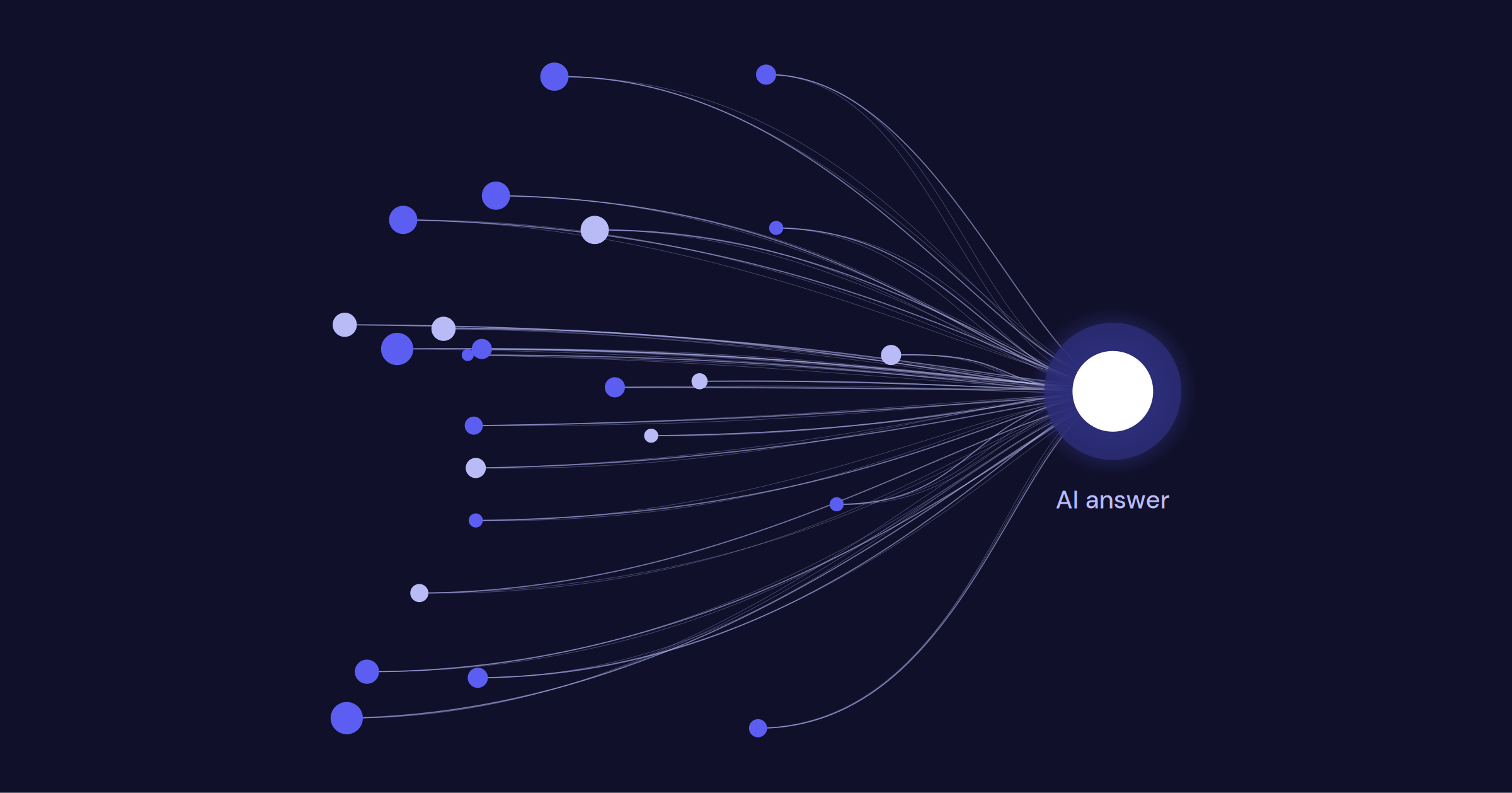

Whether you're trying to hit brand visibility targets with LLMs or just cut through the noise, the terminology around content types and distribution can get confusing. Content syndication, press releases, and earned distribution all sound similar, but the strategies, mechanics, and outcomes differ significantly.
The core distinctions come down to whether they are third-party-validated or paid placements, whether the story is brand-driven vs. journalist-driven, and how the story may be distributed.
If you’ve been on LinkedIn recently, you know that theories around what LLMs prefer have been hotly debated. But they’re mostly still predictions, powered by opaque, frequently changing algorithms, combined with splintering standards for which sources each LLM deems trustworthy enough to surface.
So how do brands maximize their likelihood of being cited by LLMs? First, let us break down the terminology that’s getting twisted online.
TL; DR: Editorial Content Signals Trust to LLMs
The consensus across the industry is that editorial content and owned newsrooms are the strongest drivers of AI visibility (which is great news for Stacker customers looking to scale their AI visibility).
Here's what has been validated in research:
- LLMs prefer earned media over press releases. Coverage written by third-party journalists in high-authority outlets generates the kind of high-credibility signals that AI models are trained to favor.
- That said, press releases still count. Press releases are a means of generating earned coverage. They remain useful to LLMs, but there is a time and place where they can be used effectively. Combining earned media and press release strategies creates a powerful synergy that increases the likelihood that LLMs will cite your brand, which is why some brands use both Stacker and a press release service. They serve different purposes.
- Earned distribution is a distinct strategy — and it sits in a category of its own.
Untangling the Terms: A Spectrum of Strategies for AI Visibility
Before diving into the full definitions, here's a quick way to think about how all the pieces fit together.
Putting these terms into play
Every aspect of brand visibility and authority-building serves a different role, while working toward the same goal of getting your brand seen and cited. Knowing how to leverage these together can be a game changer for brands– think of it like a basketball game.
- Think of the press release as the point guard. It sets the play in motion and passes the ball to journalists and outlets, hoping someone runs with it.
- Earned Media is the star forward, the one everyone's watching. When a credible journalist covers your brand, that's the big score — and the one LLMs trust most.
- Content Syndication is the utility player. You know exactly what you're getting: broad distribution, controlled placement, and predictable reach to put points on the board, but it doesn’t win over crowds.
- Content Distribution is the coach. It can’t score directly on the court, but gets the right content in front of the right publishers who can.
- Earned Distribution is the playmaker. It builds the play from scratch with editorial-quality content, offered to publishers on merit, so the whole team can score.
- Earned Reach is the final scoreboard. The cumulative result when the whole system works: multiple publishers pick up your content, and your brand shows up everywhere that counts.
Analogies aside, here’s how to really distinguish these terms from the next.
The paid & controlled ecosystem
These strategies are best for brands that want to control the narrative or widely distribute news with a specific level of detail and framing:
- Press release/newswire distribution: A brand-written announcement pushed out through a distribution service (PR Newswire, BusinessWire, etc.) to journalists and outlets. It can lead to earned media, but the press release itself is not earned media.
- Content syndication: Paid placement of brand content across third-party sites, typically through networks like Taboola or Outbrain. They often appear as "recommended stories" at the bottom of news sites and contain disclosures. The brand pays for placement, and the content is promotional, not earned.
The earned & distributed ecosystem
These strategies are merit-based and driven by external adoption. No payment changes hands between brands and their publishers.
- Earned media (the model): Coverage of your brand created by a third-party journalist or outlet — TV, print, podcast, online. The brand doesn't pay for it and doesn't write it. It's earned by being newsworthy enough that a reporter decides it's worth covering. Earned media in high-authority outlets generates strong credibility signals to LLMs.
- Earned syndication (the amplifier): When an existing piece of earned media — a story someone else wrote about you — gets republished by additional outlets. The content travels intact, the brand still doesn't pay, but it also doesn't control what gets picked up or where. The story is already written; syndication just extends its footprint.
- Content distribution: The process of brands proactively getting their own content in front of publishers or audiences who might run it. Unlike paid syndication, no money changes hands — but unlike earned media, the brand is the one initiating and often the one writing. Tools like HubSpot or social platforms help brands push content beyond their owned channels.
- Earned distribution (where Stacker sits): The brand creates ready-to-publish, editorially sound content and makes it available to publishers — but publishers choose to run it based on quality, not payment. The brand writes it; the publisher decides it's worth their audience's time. That editorial gatekeeping is what makes it earned, and it's what separates Stacker's model from paid placement.
- Earned reach: The cumulative audience exposure that results when earned distribution works — one story, picked up by many outlets, reaching readers the brand never could have accessed through owned channels alone.
Why Content Syndication Spend Is Unlikely to Drive AI Visibility
The AI citation game shows us that LLMs value editorial credibility most — preferring the same outlets and standards that have always defined trusted media. Content syndication platforms create content intended to surface in AI search, but as newsrooms crack down on AI-derived content, publisher relationships and genuine editorial quality become the real differentiators.
Earned distribution is the scalable path to earned reach and AI visibility = the best of all worlds.
➡️ Want to see what earned distribution can do for your brand? Let’s chat

Benjamin Chipman is a GenZ brand and content marketer at the intersection of media and storytelling. Informed by his experiences across the creator economy and the TODAY Show, Benjamin has a unique perspective about where traditional and new media converge. Passionate about where brands come together with culture and community, he brings this to all things brand and content at Stacker.
Feature Image Credit: Shutterstock / Canva