.png?width=150&height=27&name=Stacker_Logo%20(3).png)
Most brands already have content that could travel further than their blog.
The problem is they try to push the same asset everywhere. That usually fails in earned media (because it reads like marketing) and underperforms in paid (because it wasn’t built to drive action).
This guide shows what repurposing looks like when you adhere to editorial standards for earned pickups and leverage clear hooks and CTAs for paid ads.
You work hard on your content. Read on to make sure you are getting the most mileage out of every piece of branded content.
Repurposing vs Reposting
Repurposing is not simply reposting.
It’s taking one core idea and rewriting it so it fits the rules of the channel.
Paid, earned, and owned media all have different goals, which means if you’re not adapting your content for each approach, you’re not going to see any success.
Here’s a simple way to think about it:
- Earned media asks: “Is this useful and trustworthy for my audience?”
- Paid media asks: “Will this stop the scroll and drive the next step?”
Let’s take a deeper look at what this kind of repurposing entails.
The Rules of the Road for Each Channel
If you remember nothing else from this article, remember this:
Earned media hates brand messaging. Paid media needs it.
Earned Media Content Guidelines
Earned media is organic exposure like press coverage, reviews, earned social media coverage, shares, and word-of-mouth. It’s more credible, but you don’t control timing or narrative.
Here are some key elements to keep in mind when repurposing content in an attempt to earn media:
- Lead with insight, not the company. No one wants to promote your business without getting paid to do so. Your No. 1 priority should be providing some kind of value– that value builds your brand authority and helps your content get shared more among your intended audience.
- Use a human byline. Publishers avoid “Brand Name” bylines, understandably, when it’s not sponsored content. Plus, sharing which people were involved with the content can help it seem more authentic.
- Use credible sources and verify claims. If a reporter is fact-checking your piece and comes across even a minor error, they’re very likely to put your pitch in the trash. Attention to detail matters across editorial organizations.
- Be transparent about methodology if data is involved. Don’t leave your recipient guessing about how a study was done or a survey was conducted. Give them all the information they need to make a decision about whether your content is share-worthy.
- No sales links, no CTAs, and no product push. Remember, the objective of earned media is not to make the sale. It’s to build brand affinity and authority.
Paid Media Content Guidelines
Paid media includes ads, sponsored content, and influencer partnerships. You pay for distribution and keep control over messaging.
To have an effective paid media campaign, remember these tenets:
- One message and audience per ad set. Trying to speak to too many people will mean you resonate with no one. Consider what subset of your target audience would find the content most relevant, and then build the copy around what would engage them the most.
- One clear CTA (or no CTA at all). If you want your audience to take one very specific action, like download a report or book a call. Don’t give them other options to choose from. If you want to build trust and awareness, a CTA might not be necessary.
- Use credibility as creative fuel. Paid can amplify earned; it’s effective to turn trusted customer interactions into ad creative. This helps send quick authority signals and can improve conversions.
How to Choose What to Repurpose
The best repurposing starts with something that’s already strong.
That usually means your branded content needs one of these baked in:
1) A Real Point of View on a Niche Topic
If your topic feels “too specific,” that doesn’t rule it out. The trick is finding the human questions inside it and building the story around those questions.
Branded asset: “7 myths about [category] (and what the data says).”
Earned angle: “Most people misunderstand [common belief]. That’s causing [real-world impact].”
2) Proprietary or First-Party Data
Many brands sit on media-worthy data without realizing it: CRM trends, survey responses, product usage, site analytics, customer support logs, etc.
Original or exclusive data is more compelling to journalists, especially when it’s representative and packaged in a way that’s easy to understand and republish (charts, comparisons, shifts over time).
Remember: Even one interesting stat can be enough to earn a media mention. Afterall, most articles aren’t fully-fledged research reports.
Here’s an example:
Branded asset: “What 1.2M orders tell us about delivery delays in 2025.”
Earned angle: “Delivery delays are up in X cities. Here’s what’s driving it.”
3) A Press Release That Can be “Zoomed Out”
Press releases can be great raw material, but they need translation. One of our recommended approaches is to zoom out: write about the broader issue your product or announcement touches, without turning the story into an announcement.
Press release: “Acme Opens Operations in Phoenix and Tampa, Adds 200 Jobs”
Earned angle: “Why Phoenix is becoming a logistics hotspot (and what it means for local wages and traffic).”
The 3 Steps to Effective Repurposing
While it might feel overwhelming at first, there are three steps you can take to start repurposing.
Step 1: Extract the Message Spine
Before you write anything, pull out the core of the asset in 4 sentences:
- What’s happening?
- Why does it matter now?
- Who does it affect?
- What should someone do with this information?
This spine is what stays consistent across channels and is the foundation of why your content exists.
Everything else changes.
Step 2: Write the Earned Version First
If you can make the earned version work, the paid version gets easier.
That’s because earned forces clarity, sourcing, and authority.
Repurposing for earned media consists of zooming out from “our news” to “the bigger issue.”
💡 Tip: Timeliness and practical “news-you-can-use” framing are common traits of stories that get picked up by publishers.
Step 3: Translate that Earned Story into Paid Creative
Now you get to “market.”
But you’re marketing something specific: the core insight the reader just trusted enough to engage with.
Here are three reliable ways to convert an earned story into paid creative:
1) Pull One Proof Point and Make it the Hook
If your earned story includes a stat, a trend, or a surprising insight, that becomes the headline.
Then keep the rest simple:
- “Here’s the shift”
- “Here’s what it means”
- “Here’s what to do next”
2) Turn the Earned Headline into Multiple “Entry Points”
Paid is where you test angles:
- a pain-point hook
- a curiosity hook
- a contrarian hook
- a straightforward “how to” hook
It’s the same message spine with a different wrapper.
3) Use Earned Credibility as the Trust Layer
Use paid to amplify your earned wins, including using testimonials, press mentions, and customer interactions in ad creative to increase credibility.
This works especially well for retargeting: someone reads the earned piece, then sees a paid follow-up that offers the next step.
👉 How to do this consistently: What Does an "Always-On" GEO Strategy Look Like?
A Quick Example
Let’s take a look at a real piece of branded content and how it appears across the content ecosystem.
Hilton was named the No. 1 Best Workplace by Fortune, so naturally, they released a press release about it.
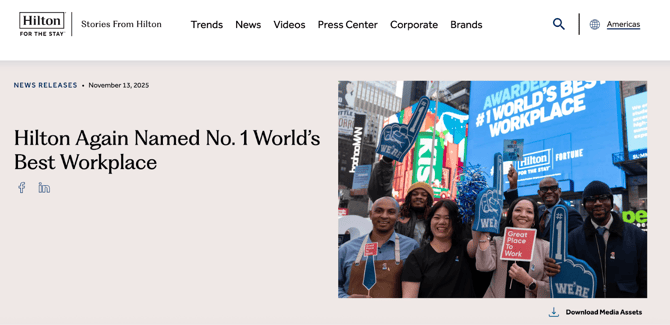
Notice below, that at the top of the press release, they’ve added additional statistics that might be interesting to reporters and add more context to the landscape of workplace satisfaction.
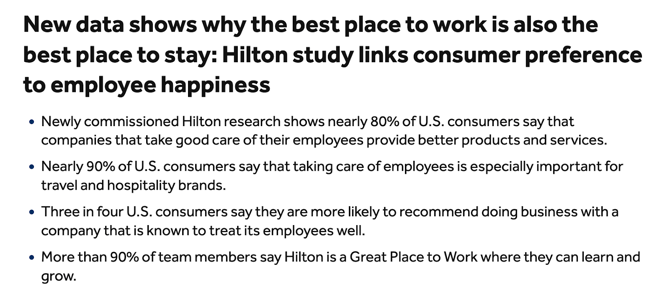
They’re already trying to take what could have just been a celebration of their brand and turn it into a story relevant to employees across the U.S.
Then, their president posted on LinkedIn about the distinction, which was then promoted (making it a paid ad).
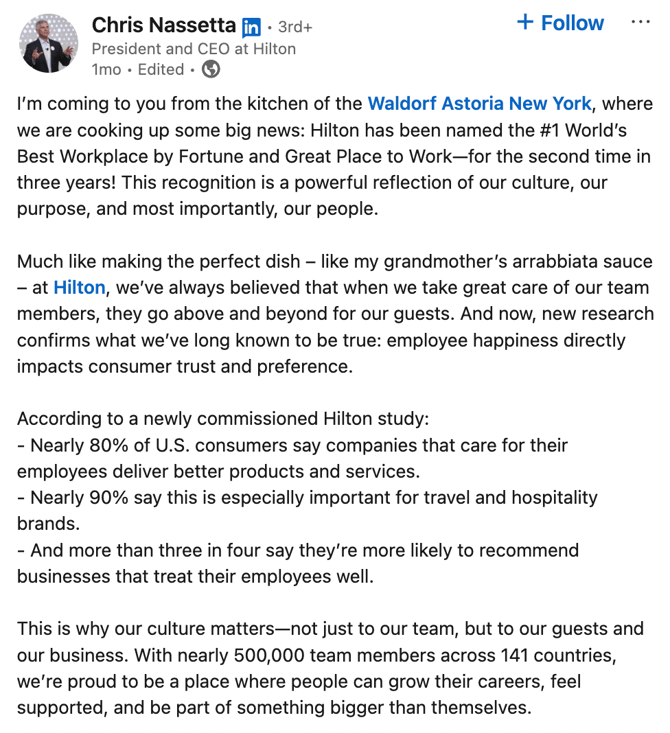
The intention here is not to drive action but to elevate their award and build more brand trust. But since it feels more personal—from the CEO himself—it reads differently than a press release.
Hilton earned media attention, too. We don’t work with Hilton, so we can’t say if they pitched for these stories or if they happened organically, but they’re great examples of how a very brand-specific event can lead to coverage that matters to a wider audience.
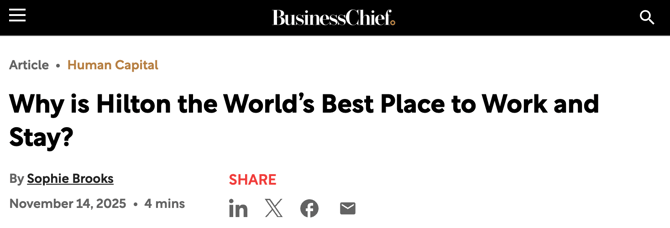
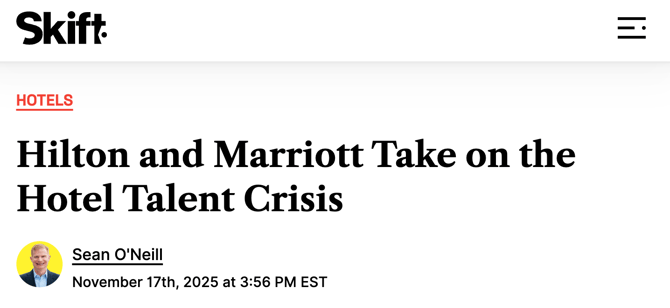
Notice how the greater context of talent sourcing and diving into what makes Hilton worthy of the award are the main focuses of the articles, not just lauding Hilton for its accomplishments.
Journalists are trying to extract what their readers can learn from a leading hotel chain.
Also notice how the press release succeeded in seeing stories via the Hilton survey:
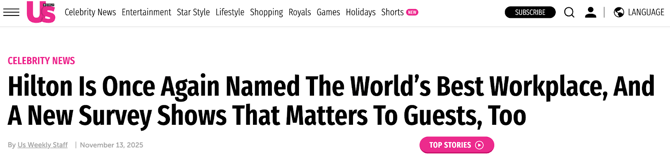
It’s true that this kind of work is easier for a huge brand like Hilton. But the same principles apply.
Think of the broader context and the individual impact of any information you’re using to either earn organic mentions or influence via paid media.
Want to Turn One Strong Asset into a Full Paid + Earned Package?
Think about what it is about your branded content that is interesting to its core and its implications on the greater industry and/or your audience.
Then, extract those insights to tell new stories from different perspectives.
Want help distributing your stories to thousands of news outlets across the US? We’re here to help.
Book a demo to see how we can help you expand the reach of your content.