HeyTutor
1 / 2Old fears when it comes to new technologies
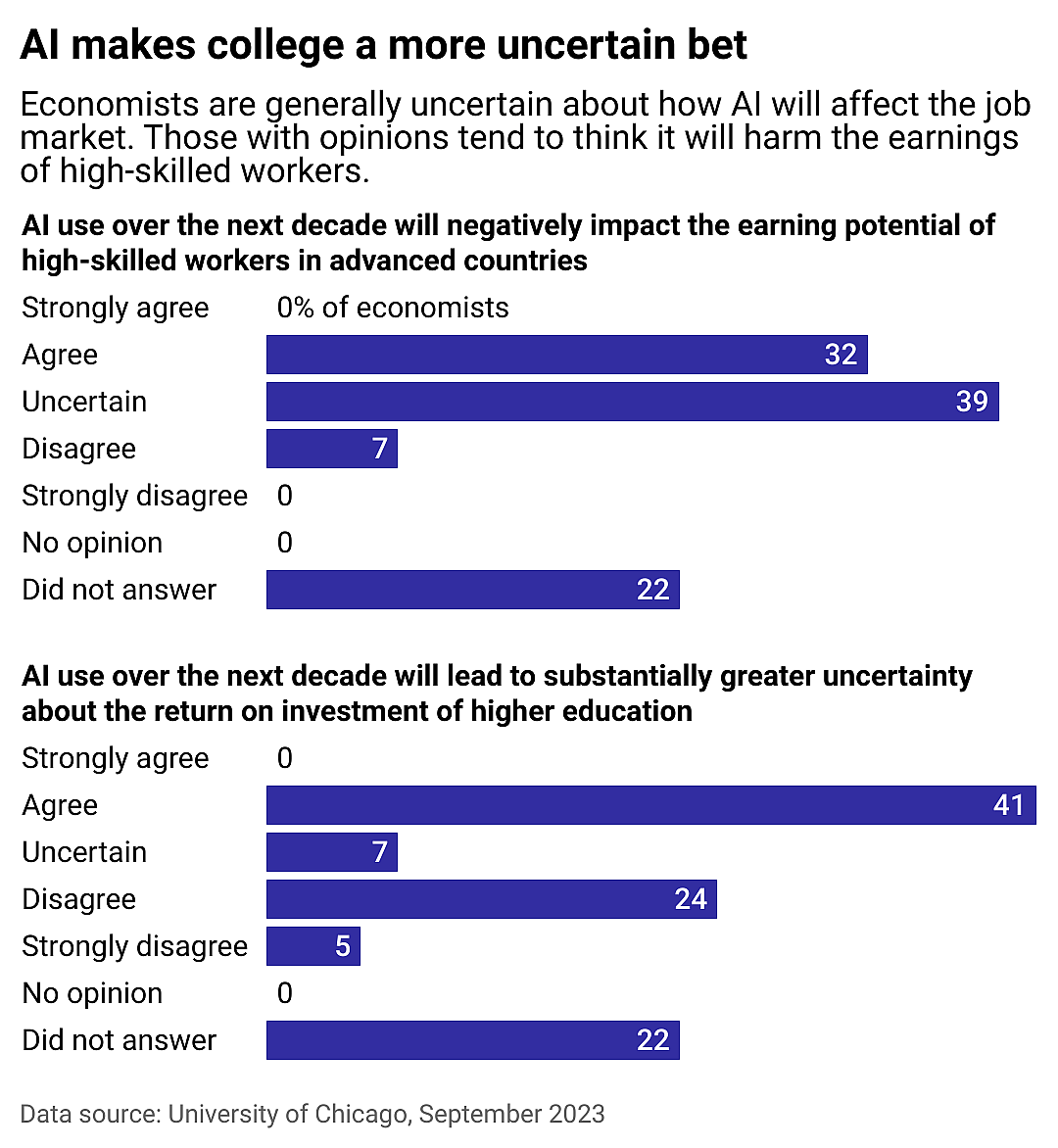
Although uncertainty surrounds the future of generative AI, a Chicago Booth poll of U.S. economists showed some had concerns about the technology's negative impact on high-skilled workers.
Of the panelists, 32% agreed AI use over the next decade will negatively impact the earning potential of a sizable number of high-skilled workers in advanced countries, while about 2 in 5 (39%) respondents were uncertain of AI's impact.
However, this sentiment in the face of the latest technology isn't new. From the spinning jenny and cotton gin during the Industrial Revolution to more modern advancements in technology like online shopping, productivity streamlining has always posed career stability concerns for skilled laborers—much like the issues being aired now with the rise of AI.
More than 200 years ago, Luddites in England focused their efforts on destroying machines of manufacturers who used them in a "deceitful" manner that was against the standard labor practices of the time, according to Smithsonian magazine. Luddites were not against machines, however, but wanted them run by workers who were properly trained and compensated.
More recently, advancements in automation tools like robots and AI have replaced workers performing routine tasks, as the research from Harvard University, the German Institute for Economic Research, and the Imperial College Business School shows. While hundreds of studies have been conducted on how work will change in the future, none have proven conclusive. Change is happening, though, and McKinsey predicts that, within the decade, generative AI technology will be capable of median human-level performance in tasks like coordination and understanding language.
The 21st century also has already seen the emergence of the gig economy used by companies like Uber and DoorDash, which rely on paying drivers little money while maintaining a largely automated "white-collar" management workforce, with algorithms making decisions on how to coordinate a network of drivers, said Brian Dolber, associate professor of communication at California State University, San Marcos, and co-editor of "The Gig Economy: Workers and Media in the Age of Convergence."
"Unless we work to curtail the impact of AI on our economy, historians may see the gig economy as an origin point for the transformations in labor and technology," Dolber told Stacker. "I think the difference [between AI and] current algorithmic management, though, may be the former's ability not just to coordinate production but to synthesize input such that it can produce new ideas."