Canva
1 / 5Puppies need more calories and protein than adult dogs
For the first four weeks of their life, puppies' diets typically consist entirely of their mother's milk. After that initial month, it's up to their new human parent to determine what to feed them.
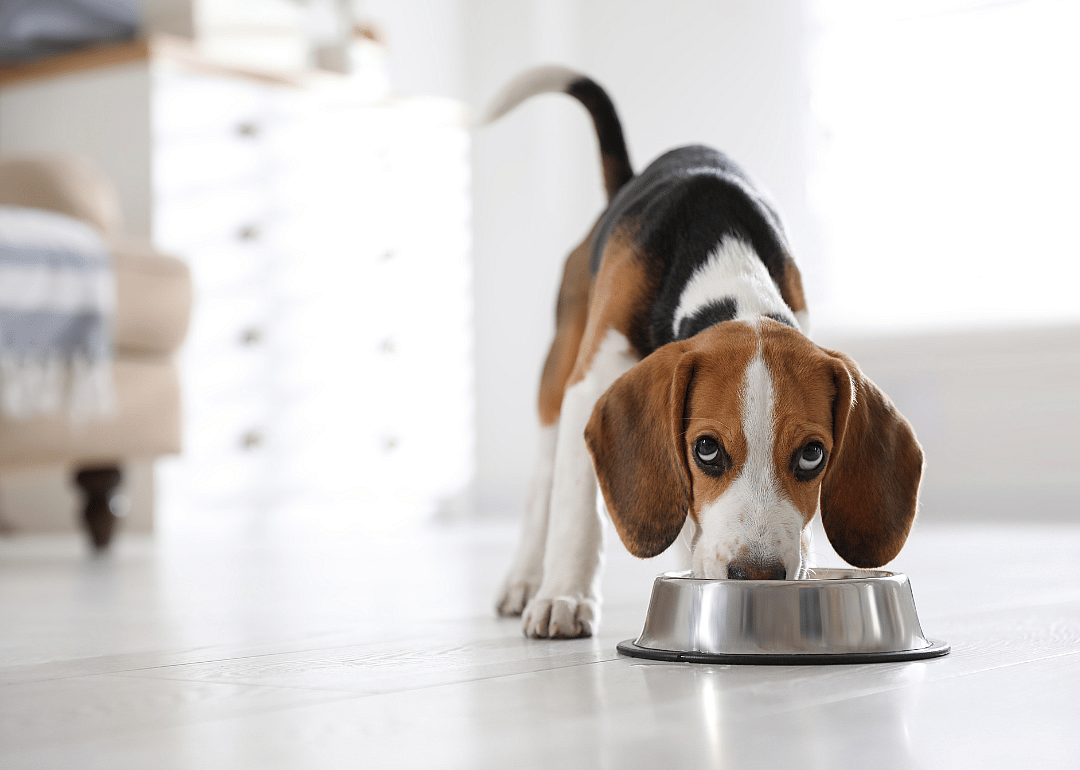
A puppy expends a lot of energy, and during their speedy growth period (the first six months of their life), they need about twice as many calories per pound of body weight as adult dogs of the same breed, according to the National Research Council. The research group recommends 56 grams of protein, 21 grams of total fat, and 990 calories per day for the average 10- to 12-pound puppy up until they're 33 pounds.
According to the American Society for the Prevention of Cruelty to Animals, a puppy's food should contain 25 to 30% protein. "The focus for puppies should be on energy-dense, protein-rich diets to support their rapid growth phase," said Dr. Michael Thompson, founder and leading veterinarian at Pets Food Safety.
Dr. Alex Crow of Pet Health Guru in the U.K. also notes that calcium and phosphorus are essential to puppies' diets. "These two minerals are crucial for healthy bone growth. It's important that these are present in optimal proportions in a puppy's diet," he said.
Puppies also eat more frequently than adult dogs. They need three to four meals per day for their first six months, at which point you can reduce the feeding frequency to two meals per day. Though the age of adulthood differs by breed, once they reach about a year old, a dog can start transitioning to adult food. That process should be done gradually by mixing a little adult dog food into their diet and increasing the proportion slightly day by day over five days.