
Multifamily dwelling fraud: What operators need to know to protect net operating income
Fraud isn’t a new challenge for apartment operators, but it’s becoming an increasingly costly one. From falsified application documents to check fraud and chargebacks, multifamily fraud takes many forms—and it’s hitting property management companies where it hurts most: their bottom line.
Zego’s Multifamily Revenue Operations Report surveyed over 600 property managers across the industry about their critical revenue challenges in February 2025. And with fraud becoming a growing pain point, multifamily operators were asked to share how it’s impacting their business. The findings are a wake-up call for operators who haven’t yet prioritized fraud prevention as part of their revenue strategy.
Let’s dig into the numbers and explore what you can do to protect your properties.
Multifamily Fraud Is More Common Than You Might Think
Unfortunately, there are numerous types of fraud that apartment operators need to take precautions against. When asked to identify the types of fraud they’ve encountered, operators pointed to a wide range of tactics that span across the resident lifecycle.
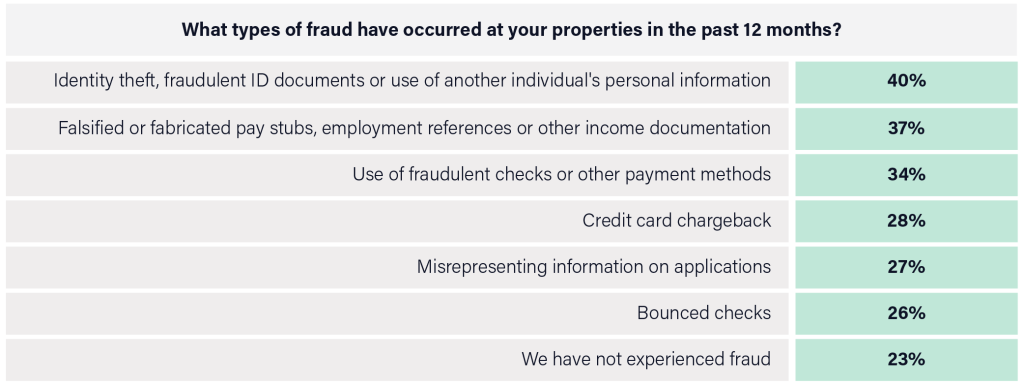
Only 23% of respondents said they had not experienced fraud—meaning the vast majority of multifamily operators are dealing with this issue in some capacity.
The survey responses reveal just how widespread fraud has become. 77% of multifamily property operators reported experiencing some form of fraud at their properties in the past 12 months.
Only 23% of respondents said they had not experienced fraud—meaning the vast majority of multifamily operators are dealing with this issue in some capacity.
Even more concerning? 39% of property managers said they have experienced non-payment of rent directly tied to fraud. That’s nearly 4 in 10 communities losing rental income because a bad actor slipped through the cracks.

The Financial Toll of Multifamily Fraud
Fraud doesn’t just create headaches for on-site teams. It drains revenue that could be reinvested into upgrading the property, improving resident experience, or operational efficiency. When asked to estimate their financial losses due to fraud over the past year, operators revealed some significant losses:
- 22% lost more than $30,000.
- 1 in 5 property managers lost over $40,000.
- Some reported losses exceeding $80,000.
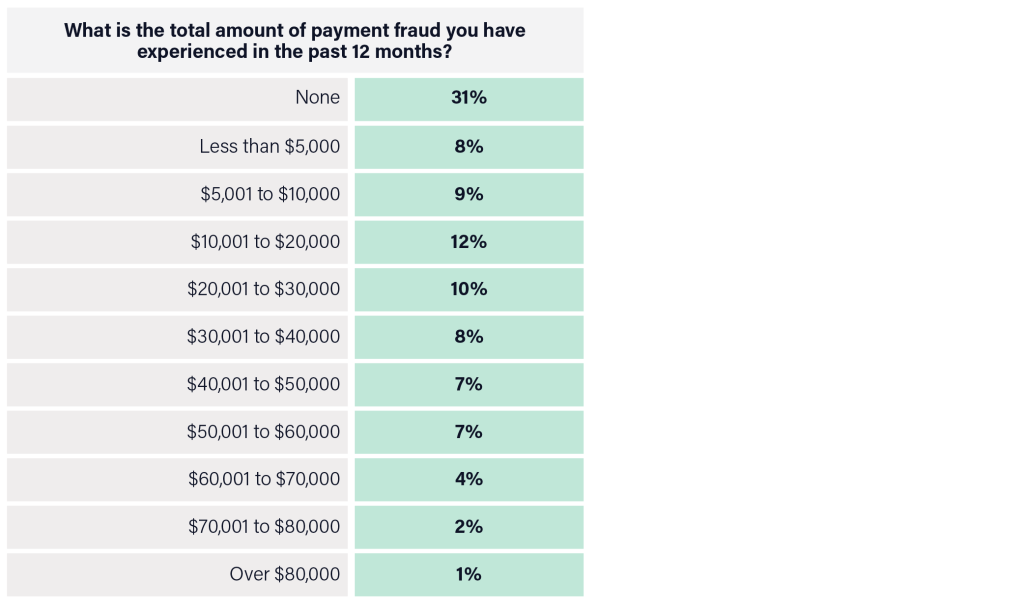
Keep in mind that these figures don’t account for legal fees or additional labor costs to resolve instances of fraud. So it’s likely companies are losing far more than this to fraud. For companies operating on tight margins or managing large portfolios, these losses add up quickly. Suffice to say that multifamily fraud isn’t just a nuisance—it’s a serious threat to NOI.
Check Fraud Is a Growing Concern
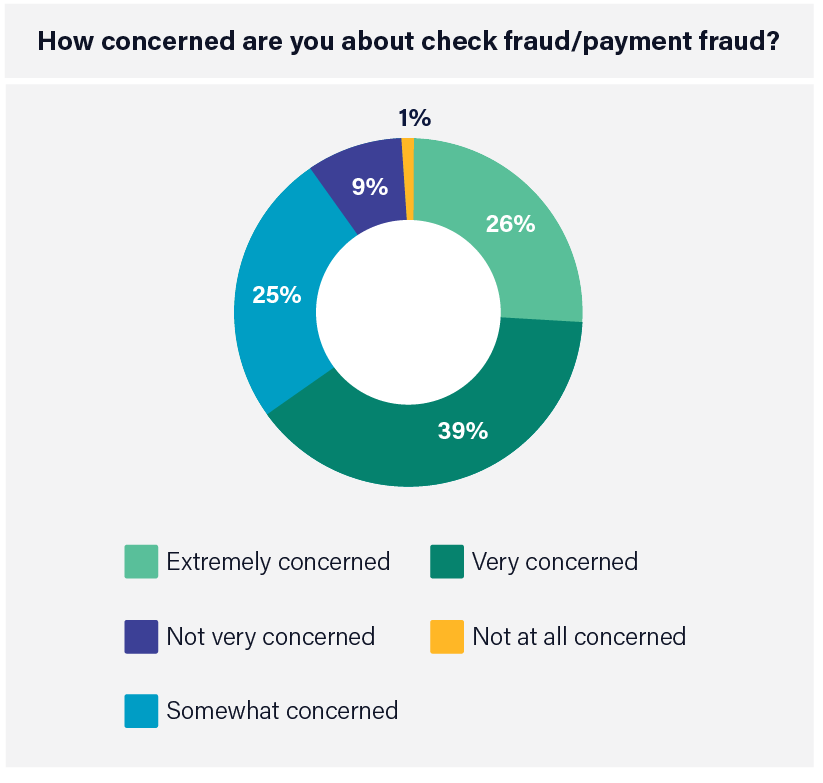
Is there one specific type of multifamily fraud keeping operators up at night? Check fraud. When asked about their level of concern regarding check and payment fraud:
- 26% said they are extremely concerned.
- 39% said they are very concerned.
- 25% are somewhat concerned.
That means 9 out of 10 property managers express some level of concern about check fraud, and for good reason.
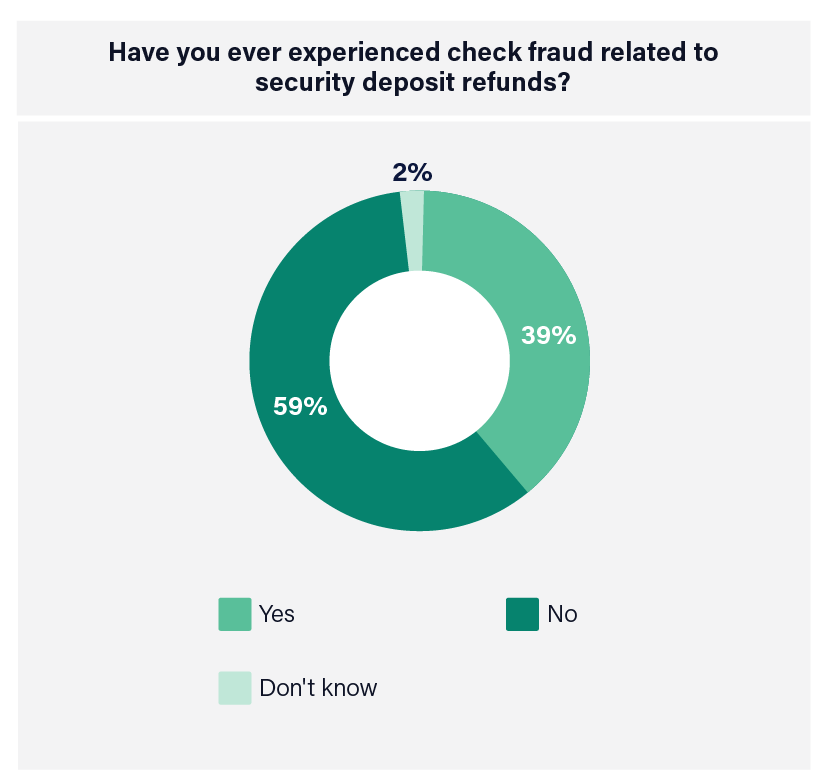
Security deposit refunds are a particularly vulnerable area. Since most refunds are still issued via paper check, they present an easy target for fraudsters. When operators were asked if they had ever experienced check fraud related to a security deposit refund, 39% said yes.
Paper-Based Payments Are Part of the Problem
Here’s an important connection: Multifamily fraud and paper-based payments often go hand in hand.
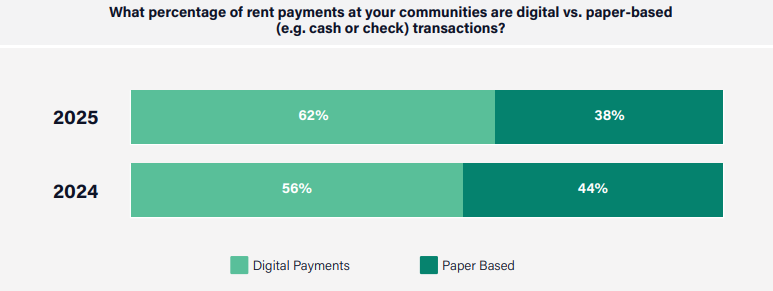
Multifamily operators report that 38% of their rent payments are still made using cash or check, while 62% are digital transactions. That’s a significant portion of payments flowing through methods that are more susceptible to fraud, errors, and processing delays.
Every paper check that comes through your office requires manual handling, introduces the risk of human error, and slows down cash flow. Checks can bounce. They can be forged or stolen. And they take days, or sometimes weeks, to clear.
Accepting cash or money orders also comes with risks, including theft and a lack of a reliable audit trail.
The takeaway? Reducing your reliance on paper-based payments and aiming for 100% digital payment acceptance is one of the most effective ways to minimize your exposure to multifamily fraud. Encouraging residents to pay digitally creates a more secure, trackable, and efficient process for everyone involved.
5 ways to fight back against multifamily fraud
The good news is that you don’t have to accept fraud as a cost of doing business. There are five proactive steps you can take to protect your properties and your revenue.
1. Prioritize Digital Payments
The more rent payments you can shift from cash and check to digital methods, the better. Digital transactions are easier to track, faster to process, and far less vulnerable to fraud. Consider offering multiple digital payment options—such as ACH, credit card, and debit card—to make it as convenient as possible for residents to pay electronically.
2. Strengthen Your Screening Process
With 40% of operators reporting identity theft and 37% encountering falsified income documents, thorough applicant screening is essential. Verify identities, cross-check employment and income claims, and use technology that can flag inconsistencies before a lease is signed.
3. Digitize Security Deposit Refunds
All phases of the resident lifecycle are susceptible to fraud, and that includes renter move-out. Since nearly 4 in 10 operators have experienced check fraud tied to security deposit refunds, it’s time to rethink how you handle move-out payments. Digital security deposit refunds eliminate the risks associated with paper checks and provide a clear, auditable record of the transaction.
4. Invest in Revenue Protection Technology
Technology built specifically for multifamily fraud prevention can help you stay one step ahead of bad actors. These types of tools are designed to help operators safeguard their income by reducing payment fraud, minimizing chargebacks, and creating a more secure rent collection process. When fraud prevention is built into your payment platform, you gain peace of mind without adding complexity for your team.
5. Train Your Team
Your on-site staff are your first line of defense. Make sure they know how to spot red flags—whether it’s a suspicious application, an unusual payment method, or a request that doesn’t add up. Regular training keeps fraud prevention top of mind across your organization.
Protect Your Revenue Against Multifamily Fraud
Multifamily fraud isn’t going away, but operators who take a proactive approach can significantly reduce their risk. By embracing digital payments, tightening screening procedures, and leveraging purpose-built technology, you can protect your properties from costly losses.
This story was produced by Zego and reviewed and distributed by Stacker.