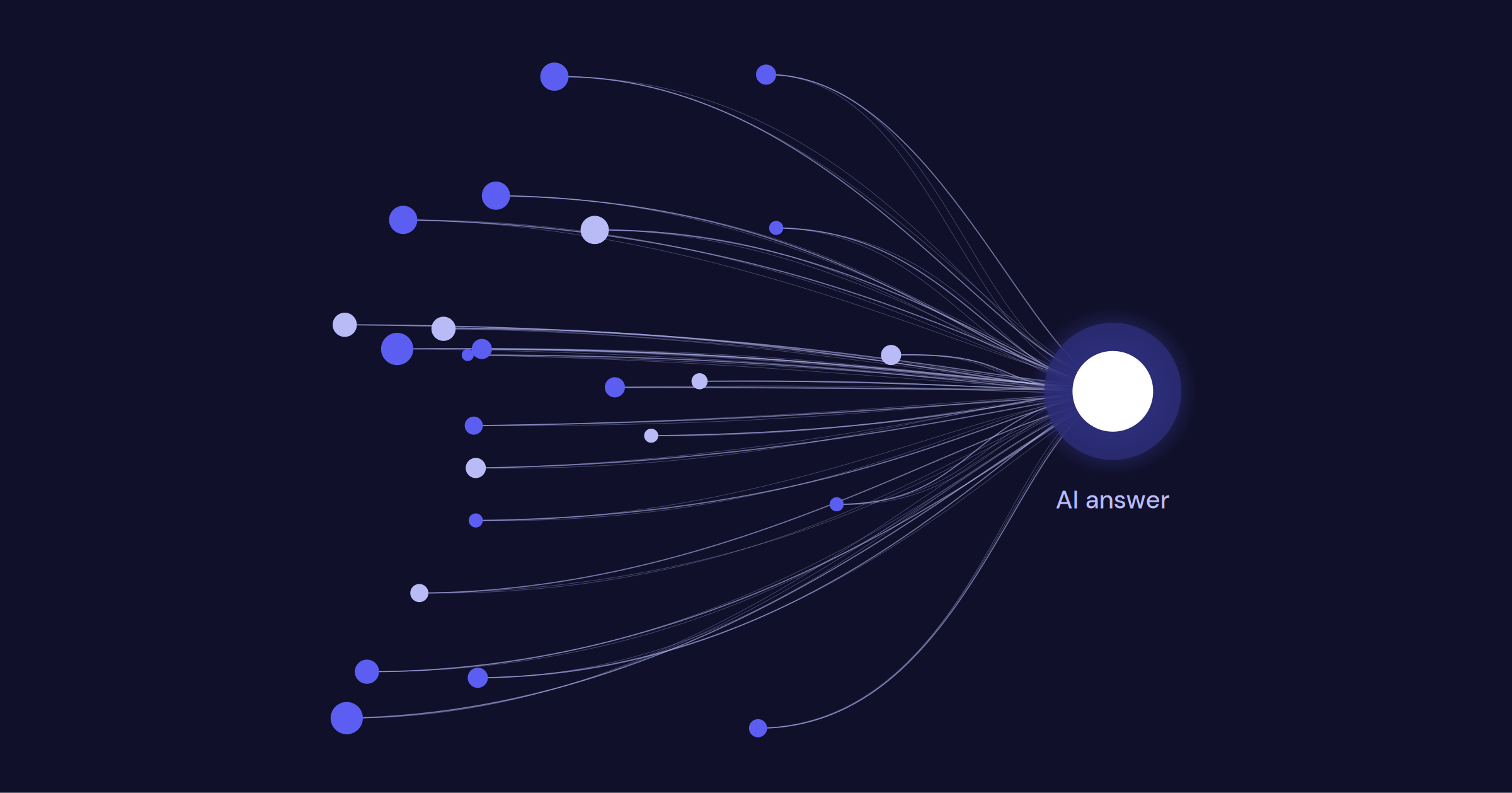

Thankfully, your VP of Content understands why earned distribution matters — knowing how it lifts AI citations, drives brand visibility, and supports business goals even as AI citation decay accelerates. That's a real win towards implementing an earned distribution strategy that can actually deliver ROI. But it's only half the battle.
Now you need to bring the C-suite along in your business case for investing in earned distribution. With executives in information overload 24/7, you'll need to sell the idea fast, anticipate questions, and connect the dots to revenue– all without losing them in the weeds.
Presentation Tips: Nail the Framing
Here's everything you need to make the case upward: framing, language, proof points, and a reusable briefing structure.
Define your scope first.
Earned distribution can be a nuanced topic. The AAA framework (coined by ex-Google Marketer & career writer Soph Hurst) is a useful gut-check for calibrating the depth of your conversation with senior leaders.
Altitude: Meet execs at their level. Start with the potential impact, then dive into details. Leaders care about strategy, company goals, market position, major risks, and long-term vision. What they often lack is visibility into the execution realities required to reach those goals. That's your value in this conversation.
Audience: Why does this matter to them and what do they already know about the topic? Know and use their goals, revenue metrics, awareness KPIs, and show how your proposed strategy helps reach them. Remind them that the competitive landscape is just getting more crowded, with more companies being launched every single day, now with the help of AI-development tools. Brands that aren't investing in AI visibility are seeing only a sliver of the web traffic they had even a year ago.
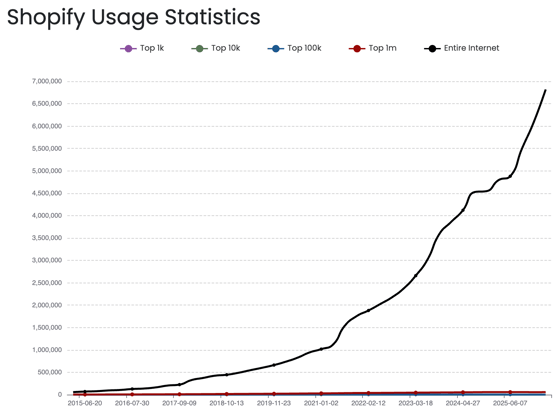
Exponential increase in the e-commerce marketplace from 2015-2025, with rapid growth in the past year as more vibe-coded apps launch. Source: BuiltWithin
Action: Be clear upfront about what you need from leaders — a decision, resource approval, directional input, or strategic alignment. Let them use that goal as a lens for everything else in your presentation.
Structure of Your Business Case for Earned Distribution
Hit these five points to cover the essentials of distribution:
1. Start with the point. Lead with the outcome, not the background. For example: "We can achieve 2x more business-qualified leads by Q3 using an earned distribution strategy. Here's the direction — then we'll get into details." This anchors the room quickly before anyone gets antsy.
2. Why does this matter now? Align your content strategy to high-level revenue goals. Early movers on earned distribution are already seeing measurable impact on brand visibility in AI results — and longer-term authority and trust that compounds over time.
Deeper dive: Understand how share of voice is the ultimate indicator of content ROI.
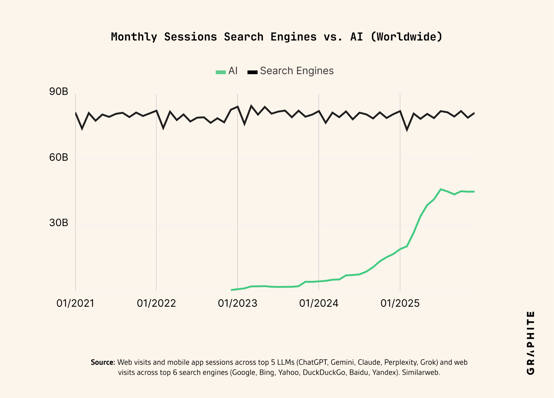
Illustration that shows the rising influence of AI vs search engines. Image source: Graphite.
3. Supporting inputs. Weave in background: data, options, and evidence that preempt likely questions. Simplify wherever possible, especially jargon. Make sure your strategy outlines how you'll measure performance, analyze results, and course-correct as needed.
4. Other stakeholder POV. Run your business case by a cross-functional leader on another involved team before the meeting to identify gaps to address and verify your approach. Note in your presentation that they're aligned, as social proof to gain buy-in.
5. The decision point: What I need from you. Name exactly what you need to proceed. If they're uncertain on your strategy, propose a pilot first.
Earned Distribution: Key Messages & Talking Points
Using these key messages below, you’ll get your C-suite to see how retaining AI citations is a compounding, measurable asset to the business — not a soft brand play.
Trusted, earned coverage is the key to AI visibility.
Strong storytelling matters even more in the AI era and earned distribution is imperative for reach, category creation, and AI visibility. About 90% of AI citations come from earned media, with distributed content often acting as the primary source in AI responses.
What is earned distribution?
Earned distribution is a step up from sponsored articles, owned media, and syndication. The brand creates ready-to-publish, editorially sound content and makes it available to publishers — who can choose to run it based on its quality, rather than payment.
The brand writes it, and the publisher decides it's worth their audience's time. That editorial gatekeeping is what makes it earned, and what separates it from paid placement.
Content distributed through Stacker’s platform is cited by AI 2.4x more than content published only on brand-owned websites.
⭐ Deeper dive: If you anticipate questions on the differences between earned distribution and content distribution, refer to our blog.
Earned distribution coverage compounds over time.
Earned distribution helps brands compete in a crowded landscape. With product parity becoming the standard due to advancements in AI development, trust is the brand differentiator of the era. Earned distribution is the way to earn trusted authority at scale.
With earned distribution, a single story, picked up by many outlets, has a compounding impact, reaching audiences that no single brand could access through owned channels alone. A brand's own website often accounts for only 5–10% of what AI platforms reference — making third-party distribution critical for visibility.
The more customers, publishers, and reporters see a brand’s name repeated in AI results and earned media, the more authority it has, which carries significant weight in how LLMs surface content.
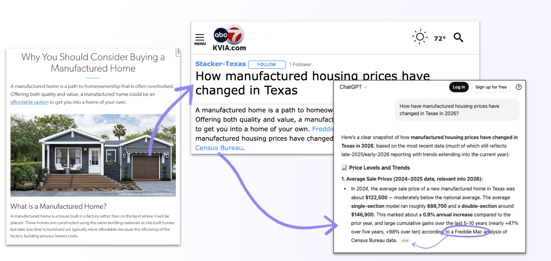
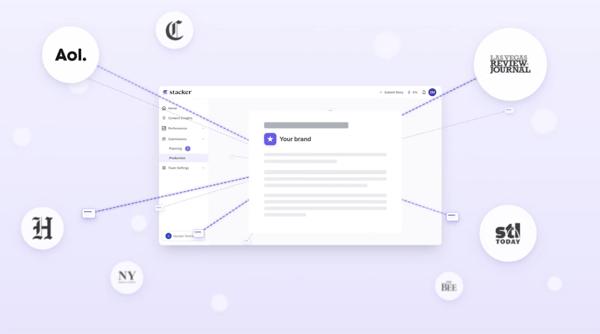
Illustration of how a story distributed on Stacker’s platform gets picked up by media, which provides third-party validation that LLMs use in AI results.
Earned distribution prevents citation decay
97% of stories distributed through Stacker earned at least one AI citation. Content distributed through Stacker has a citation half-life of nearly 10 weeks — a 2.1x advantage in durability compared to average AI citations, which often fade within weeks.
Stacker helps brands produce more resilient content by securing native placements in multiple media outlets (that don’t appear as sponsored or syndicated content) and by using canonical links that consolidate SEO authority across sites rather than competing for rank.
The Benefits of Working with an Earned Distribution Partner
Brands who work with an earned distribution partner like Stacker get compounding authority while using fewer internal resources.
Stacker:
- helps identify stories and headlines that are likely to be picked up by media, based on their millions of data points
- provides brands with best practices on how to write compelling stories
- supplies measurable data with clear impact to AI results with clear business impact
- is already being used by hundreds of brands across industries.
Summing Up the Benefits of Earned Distribution Strategies
Earned distribution gives your content a longer, more measurable life — in media, in search, and in AI. It reduces reliance on mass PR and frees your internal team to focus on high-intention targets. But most importantly to most teams right now, it crucially builds the kind of third-party credibility that AI models actually cite.